The Office of the Medicaid Inspector General (OMIG) is a government entity that protects against Medicaid fraud. To keep governments, patients, and providers safe, OMIG keeps a database of providers and enrollees who have been accused of committing a crime related to health care services.
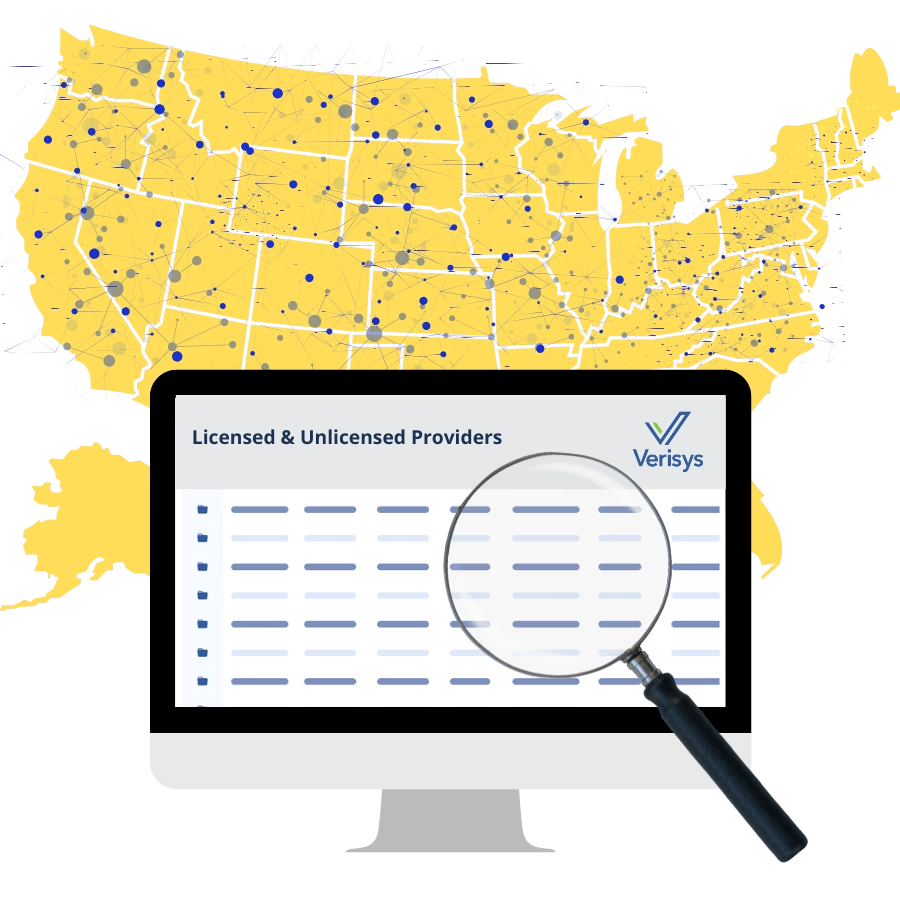
OMIG adds practitioners to its list of Medicaid exclusions when someone is arrested for crimes or misdemeanors such as abuse, fraud, or taking kickbacks. When hiring a health care provider, the government expects health care services to verify that the individual or entity they hire is not excluded from practicing by checking the database, available at OMIG’s website.
In New York State, the government requires health care organizations to check the New York State Medical Exclusion List every 30 days. You can check up to five providers at a time.
What’s the Difference Between Mandatory and Permissive Exclusions?
Once OMIG learns of an unlawful practice, it will send the provider a Notice of Proposed Action. This notice informs the provider of what OMIG intends to do. In most cases, it will exclude providers from practice by adding them to the NYS State Exclusion List. In some cases, it may also censure the provider. Providers have 30 days to appeal the notice.
If the provider is accused of a more serious crime that could endanger the public, the agency may send the provider a Notice of Immediate Sanction. In this case, providers only have five days to respond before exclusion.
Medicaid exclusions fall into two categories: mandatory and permissive. Mandatory exclusions refer to individuals and organizations convicted of a criminal offense, as required by law.
Types of mandatory exclusions are:
- Medicare or Medicaid fraud
- Any other fraud related to Medicare, Medicaid, CHIP, or other state healthcare programs
- Patient abuse and neglect
- Healthcare-related convictions for financial misconduct, fraud, or theft
- Felony convictions such as writing illegal prescriptions, dispensing, manufacturing, or distributing controlled substances
Permissive exclusions refer to misdemeanors relating to health care rather than criminal offenses.
Types of permissive exclusions are:
- Health care fraud not related to a Medicare or state health care program
- Fraud in a government program other than health care
- Misdemeanor conviction relating to the prescription, dispensing, manufacture, or distribution of controlled substances
- Revocation or suspension of a license because of professional performance, professional competence, or financial integrity
- Providing unnecessary or substandard care
- Submission of false claims to a federal health care agency
- Receiving unlawful kickbacks
- Defaulting on loans or scholarship requirements for health care education
- Administering a sanctioned entity as an owner, officer, or manager
Why Do I Have to Check the State Exclusion Database?
The NYS Medicaid Exclusion List shares its data with the national database, as do other state Medicaid exclusion lists. However, each state has its own rules about how and when data must be submitted. As new providers are added to the NYS Medicaid Exclusion List and others are reinstated to practice, the list changes. Frequent verification is necessary to stay current.
Not only will you protect your patients with monthly database checks, you’ll also protect yourself.
If you hire or continue health care services through a provider on the NYS Medicaid Exclusion List, the government will refuse to pay for the services you provide, and it can also impose fines. It may also expect you to reimburse the government for services already paid. In order to protect yourself, your practice, and your patients, it’s essential that you check the OMIG State Exclusion database at least every 30 days.
CheckMedic by Verisys makes it easy for you to verify provider credentials not only against the OMIG State Exclusion database but also against all other required federal and state primary sources with real-time results for every single transaction. Learn more from Verisys about how you can ensure your providers’ credentials meet all government and regulatory standards.
Learn more about how Verisys can assist your HCOs in meeting all government and regulatory standards.
 |
Written by Verisys Verisys transforms provider data, workforce data, and relationship management. Healthcare, life science, and background screening organizations rely on our comprehensive solutions to discover their true potential. Visit verisys.com to learn how we turn problems into power.
|