In healthcare, every second counts, but too often, administrative delays and errors slow things down—especially when it comes to credentialing.
Thanks to automation in healthcare provider credentialing, what once took weeks or months can now be streamlined: AI-driven verification tools, real-time data syncing, and seamless integrations with healthcare management systems are turning credentialing into a fast, accurate, and hassle-free process.
What does this shift mean for healthcare providers and organizations? Faster onboarding, fewer healthcare compliance risks, and more time spent on patient care—not paperwork. Let’s dive into how automation is reshaping all types of credentialing and why it’s a game-changer for the industry.
What Is Automated Credentialing?
At its core, automated credentialing refers to the use of software, artificial intelligence, and machine learning to verify and maintain the credentials of healthcare professionals. It replaces manual data entry and physical document verification with streamlined digital processes.
In traditional credentialing, healthcare organizations manually collect and verify information from licensing boards, medical schools, and past employers—a process that can take a significant amount of time to complete.
Automated credentialing isn’t just about cutting down paperwork—it’s about getting qualified providers to patients faster. Instead of waiting long periods for approval, automation:
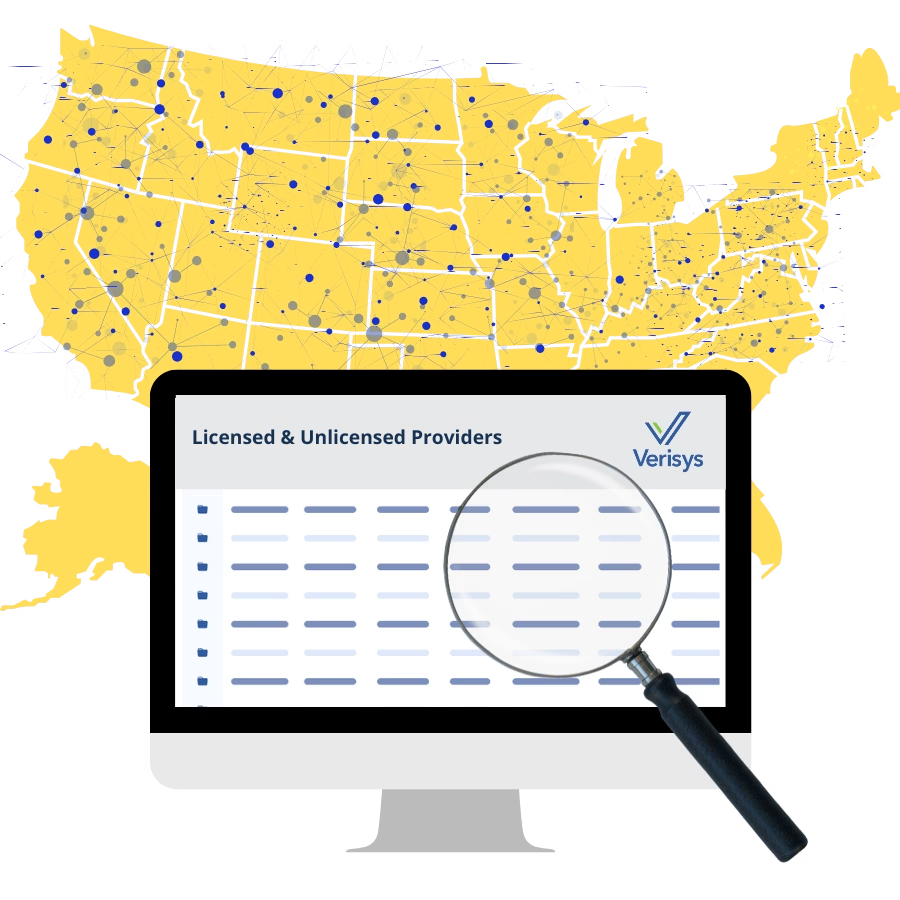
- Taps into national databases
- Verifies licenses in real-time
- Keeps track of expiring credentials before they become an issue.
Think about a hospital credentialing service onboarding a traveling nurse in the middle of flu season. With manual nurse credentialing, the process could drag on for weeks, delaying much-needed care. But with automation, that same nurse could be verified and ready to work in days.
In an industry facing staffing shortages and ever-changing regulations, automation isn’t just a nice-to-have—it’s a need-to-have.
The Advantages of Automated Credentialing
Healthcare organizations are quickly realizing that automation is more than a time-saver. Let’s dive deeper and break down its key benefits.
Faster Verification
Automated systems instantly verify licenses, certifications, and malpractice history by pulling data from authoritative sources in seconds—something that would take human credentialing teams weeks to complete.
This acceleration has major downstream effects: Faster onboarding means more providers are available to see patients, which helps to reduce staffing gaps and improve patient access to care. It also allows traveling nurses, telehealth providers, and contract physicians to move between states and facilities with minimal disruption to their practice and the operations of the healthcare facility.
Reduced Errors and Inconsistencies
Unfortunately, human error is unavoidable in manual credentialing. A simple data entry mistake—like an incorrect expiration date or missing certification—can lead to delays, compliance issues, or even unqualified providers slipping through the cracks.
Automated systems eliminate these risks by ensuring provider data accuracy at every stage.
AI-powered verification tools cross-check multiple databases to flag inconsistencies, send alerts for missing documentation, and reduce the likelihood of outdated credentials going unnoticed. This streamlines the physician and nurse credentialing processes, allowing qualified staff to start caring for patients more efficiently.
Improved Compliance and Reporting
Automated provider credentialing management ensures that healthcare organizations stay compliant with federal, state, and accreditation standards like:
- The Joint Commission (TJC)
- National Committee for Quality Assurance (NCQA)
- Centers for Medicare & Medicaid Services (CMS)
Automated systems can generate real-time compliance reports and send alerts when it detects expired credentials or missing information. These systems can help prevent an expired license from slipping through the cracks and resulting in fines or temporary suspension of billing privileges.
The Technology Behind Automated Credentialing
AI, machine learning, and seamless integrations with healthcare systems are driving this change within the healthcare space.
AI and Machine Learning
AI is transforming credentialing from a tedious, reactive process into a smart, proactive system. Instead of scrambling to fix compliance issues after they arise, AI healthcare compliance tools help organizations stay ahead of the game.
AI can even spot inconsistencies in credentialing records in real-time, preventing costly mistakes before they happen. By handling these tasks behind the scenes, AI allows credentialing teams to focus on what really matters—getting qualified providers to patients faster.
Integration with Other Systems: A Seamless Digital Ecosystem
One of the biggest perks of automated credentialing is how seamlessly it connects with other healthcare systems, eliminating frustrating bottlenecks and extra paperwork.
For example, picture a new doctor joining a hospital—automated credentialing instantly syncs with HR systems to streamline onboarding, links with electronic health records (EHRs) to grant secure access, and verifies credentials for insurance reimbursements without the usual back-and-forth.
These smart integrations create a smooth, all-in-one workflow that cuts down on redundancies, saves time, and keeps everything running efficiently behind the scenes.
Maintaining Data Security in Healthcare Automation
Credentialing isn’t just about verifying qualifications—it’s also about protecting sensitive provider information. With medical licenses, Social Security numbers, and malpractice histories all in one place, security breaches could have serious non-compliance consequences.
That’s why automated credentialing systems must meet strict data protection standards, like HIPAA, to keep this information safe. The best systems go beyond basic compliance, using bank-level encryption to lock down data, multi-factor authentication to prevent unauthorized access, and real-time monitoring to catch threats before they become a problem.
For example, platforms like Verisys employ AI-driven security protocols to flag suspicious activity and ensure credentialing data remains protected.
Best Practices for Implementing Automated Credentialing
To maximize the benefits of automated credentialing, healthcare organizations should follow these best practices.
Selecting the Right Automation Tools
Not all automated credentialing systems are the same. When choosing one, healthcare organizations should look for:
- Ease of use: A system that’s simple for staff to navigate.
- Built-in compliance: Automatic tracking for TJC, NCQA, and CMS requirements.
- Seamless integration: For streamlined work with existing healthcare systems.
- Room to grow: A system that scales with the organization’s needs.
Picking the right system makes implementation easier and sets healthcare organizations up for long-term success.
Ongoing Training and Support
Even the best credentialing system is only as good as the people using it. Ongoing training helps staff maximize automation tools, solve problems when they occur, and stay up to speed with system updates.
Having dedicated IT support on hand is also crucial for resolving tech issues quickly and maintaining an efficient system.
The Future of Automated Credentialing in Healthcare
Automated credentialing isn’t just a convenience—it’s the future of healthcare administration. By accelerating provider data verification, reducing errors, and ensuring airtight compliance, automation is fundamentally improving how healthcare organizations onboard and manage providers.
Verisys is leading the charge in transforming credentialing through automation.
Verisys delivers advanced healthcare provider credentialing solutions, including real-time eligibility screenings, comprehensive data verification, and rigorous compliance checks—all designed to keep your organization ahead of evolving regulations. Streamline your processes, reduce risk, and ensure top-quality patient care with Verisys. To learn more about credentialing for hospitals, Medicaid providers, and retail pharmacies, contact us today.
Sources:
CMS. Enrollment & Certification Roadmap For Institutional Providers. https://www.cms.gov/files/document/provider-enrollment-certification-roadmap.pdf
Simbo. Harnessing AI in Medical Credentialing: How Data Analysis Transforms Provider Verification and Identifies Potential Issues. https://www.simbo.ai/blog/harnessing-ai-in-medical-credentialing-how-data-analysis-transforms-provider-verification-and-identifies-potential-issues-2399663/
Health Information Technology. Guide to Privacy and Security of Health Information. https://www.healthit.gov/sites/default/files/pdf/privacy/onc_privacy_and_security_chapter2_v1_022112.pdf