Why Preventing Fraud, Waste, and Abuse Requires More Than Traditional Screening
By Asurint & Verisys
Public health agencies and government healthcare programs face a critical responsibility to:
- Protect public programs
- Safeguard taxpayer dollars
- Prevent fraud, waste, and abuse (FWA)
- Ensure that every provider, contractor, and employee meets strict federal and state standards.
Yet for many agencies, screening is disconnected. One system checks national exclusions; another searches local court dockets; a third verifies credentials against state licensing boards.
Individually, each screening process serves a purpose. Together, they should present a complete story. Too often, they don’t, exposing agencies to regulatory penalties, financial loss, and compromised public safety.
That’s why a growing number of government healthcare organizations are moving beyond siloed screening strategies and adopting a more connected approach to workforce and provider risk management.
The Problem in Point-in-Time Screening
Government healthcare screening have traditionally relied on point-in-time checks conducted during initial onboarding. While these checks are essential, they offer zero visibility into changes that can occur post-hire.
- The Reality of Sanctions & Exclusions: An individual cleared today could face administrative sanctions, license suspensions, or state-level exclusions tomorrow.
- The Limitations of Standard Searches: Traditional public record checks frequently miss multi-jurisdictional criminal filings or non-indexed federal exclusions, leaving agencies with an incomplete risk profile.
The issue isn’t that public health agencies and government healthcare programs don’t lack data, but that important risk signals are remaining disconnected.
Organizations need to understand more than whether an individual passed a screening event at a specific point in time. They need confidence that the individual continues to meet the standards required to participate in government-funded healthcare programs.
To effectively combat healthcare fraud and maintain compliance with the Office of Inspector General (OIG) standards, agencies must bridge the gap between deep criminal intelligence and comprehensive healthcare-specific datasets.
Why Criminal Intelligence and Compliance Data Belong Together
Whether managing providers, contractors, or workforce populations, government programs need a screening strategy that can scale with growing oversight requirements.
Government organizations have treated criminal screening and healthcare compliance monitoring as separate functions. Yet both serve the same goal: helping agencies make informed decisions about who can participate in government healthcare programs.
A more connected approach can help agencies:
- Strengthen fraud, waste, and abuse prevention efforts
- Improve workforce and provider oversight
- Reduce compliance gaps between screening activities
- Gain a more complete view of organizational risk
This is where the partnership between Asurint and Verisys creates value.
Asurint brings deep expertise in criminal intelligence, helping organizations uncover relevant criminal history information through advanced search methodologies and public records research. Rather than forcing every search through the same process, it automatically selects the strategy most likely to deliver the best balance of coverage, speed, accuracy, and cost.
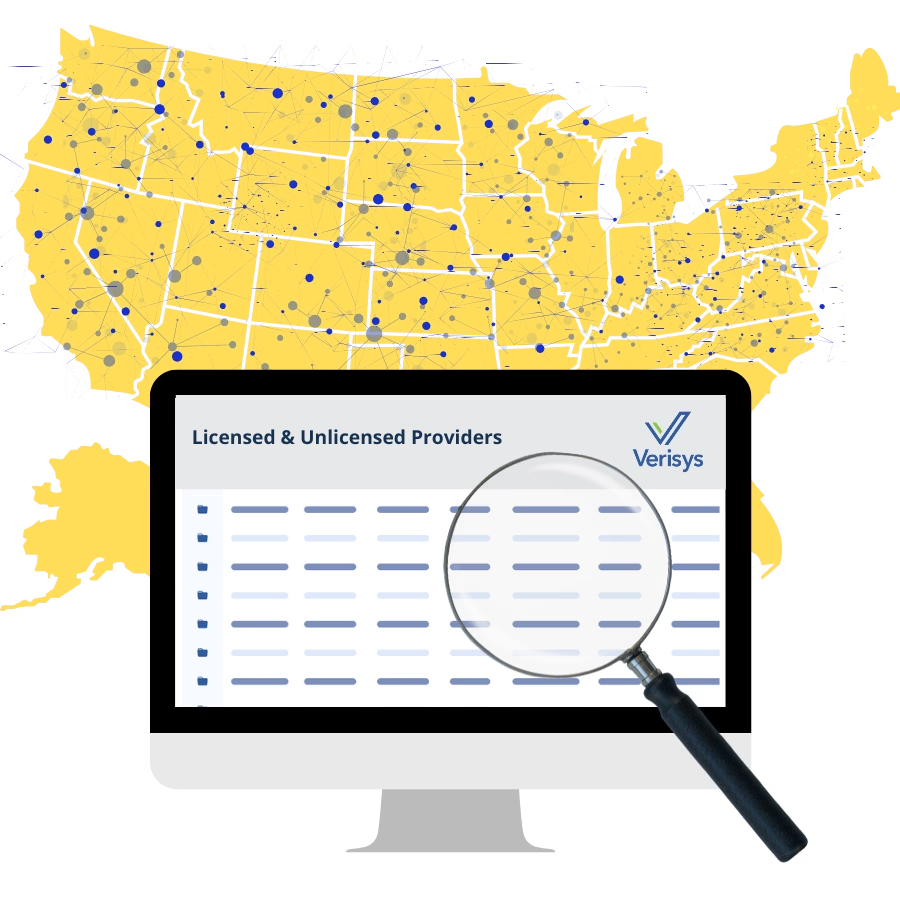
Verisys specializes in healthcare-specific data intelligence, helping organizations monitor exclusions, sanctions, disciplinary actions, licensure status, and other compliance-related indicators. Verisys delivers visibility into the data sources that healthcare organizations and government agencies rely on to maintain compliance and protect program integrity, achieving a 99.95% data accuracy rate.
By bringing these two solutions together, the result is a more complete view of risk than either dataset can offer alone.
Looking Ahead: Building a Truly Holistic Defense Strategy
While combining criminal intelligence with provider sanctions creates a stronger defense against FWA and regulatory risk, public risk mitigation doesn’t end with credentials and criminal history.
To truly achieve a complete, end-to-end screening strategy, it needs to layer multiple risk signals together, giving agencies a more complete picture of who they’re onboarding and whether that individual continues to meet eligibility requirements over time.
Forward-thinking government bodies are expanding their verification and monitoring strategies to include:
- Identity Verification (IDV): Ensuring that the individual presenting credentials is genuinely who they claim to be. Advanced ID verification stops synthetic identity fraud at the front door before screening even begins.
- Continuous MVR Monitoring: For public health workers, mobile clinicians, and transportation personnel,, real-time motor vehicle record (MVR) monitoring provides ongoing visibility into license suspensions, DUIs, and severe driving violations, helping protect both agency assets and public safety.
By connecting identity, criminal intelligence, healthcare compliance data, and continuous monitoring, government healthcare organizations can move from reactive screening to proactive risk management, helping strengthen program integrity, protect taxpayer dollars, and build greater trust in the services they provide.
Transform Your Agency’s Screening Framework
As government healthcare programs continue to evolve, the organizations responsible for protecting them will need more than siloed screening tools.
That means bringing together:
- Identity verification
- Criminal intelligence
- Exclusions and sanctions monitoring
- Licensing and credential verification
- Continuous monitoring
When those components work together, they gain a stronger framework for protecting program integrity and improving compliance oversight. Because when it comes to protecting public programs, patients, and taxpayer dollars, seeing the whole picture matters.
Discover how Asurint and Verisys can help you eliminate risk and streamline compliance across your workforce and provider networks. Visit Asurint or reach out to your Verisys representative today.