What Is Insurance Credentialing?
Medical insurance credentialing is the process by which healthcare providers and organizations are verified and approved to participate in an insurance company’s network. It’s a formal process of verification to ensure that the provider meets the insurer’s standards for qualifications, licensing, training, and experience.
There are multiple types of credentialing in healthcare, such as those for medical doctors, nurses and nurse practitioners, and allied health professionals. However, across all types, multiple stakeholders are involved, including:
- Providers: Physicians, nurses and nurse practitioners, specialists, therapists, and other licensed healthcare professionals (HCPs)
- Payers: Insurance companies, Medicare, Medicaid, and managed care organizations
- Administrators: Practice managers, hospital administrators, compliance officers, and credentialing coordinators
- Patients
Typical documents and qualifications required in the physician insurance credentialing process include but may not be limited to:
- Proof of medical education and training
- Government-issued photo ID
- State licenses and board certifications
- Proof of malpractice insurance coverage
- DEA registration and controlled substance permits
- Work history and professional references
- Background checks for disciplinary actions or criminal records
In most cases, the provider credentialing process applies to licensed, independent HCPs who are legally authorized to deliver patient care without direct oversight, working fully within the scope of their license. The majority of payers require re-credentialing every two to three years. Any changes in a provider’s status, such as moving states, gaining new certifications, or changing practice locations, must be updated promptly.
Why Insurance Credentialing Matters for Providers
For healthcare providers, insurance credentialing is crucial for maintaining professional credibility as well as financial stability. Without it, providers cannot enroll with payers or bill for services. As a result, this can lead to costly gaps in reimbursement. Active credentialing ensures a seamless connection to insurance networks, allowing providers to serve covered patients and receive timely payment.
By vetting qualified and reliable practitioners, the process also begets improved trust among patients and insurers alike. Being listed in an insurer’s network directly increases visibility, attracts new patients, and signals that the provider meets rigorous quality and safety standards.
Credentialing also comes into play when it comes to compliance by safeguarding against legal and regulatory risks. By verifying that a provider’s licenses, certifications, and background meet stringent standards, the process helps protect against malpractice exposure, contract violations, and audit failures. In sum, credentialing supports a provider’s ability to deliver care, maintain compliance, and sustain a thriving medical practice.
Consequences of Incomplete or Delayed Credentialing
Incomplete or delayed credentialing can lead to a cascade of issues that affect nearly every aspect of a healthcare practice, from revenue flow to patient relationships and compliance status. Even short gaps in a provider’s credentialing status can interrupt reimbursement, reduce patient access, and expose a provider to legal or regulatory risk. These setbacks often require additional administrative effort to resolve, siphoning resources away from patient care and daily operations.
Payment Delays and Denials
One of the most immediate and tangible impacts of incomplete or delayed credentialing is the disruption to revenue. If a provider is not fully credentialed, insurers may deny claims outright or put them on hold until the process has been completed. Retroactive payments may be negotiated in some cases, but they are not guaranteed. This delay can lead to cash flow challenges and strained operating budgets. Practices may be forced to reallocate funds or delay vendor payments. Frequent issues include claims rejected for “provider not enrolled” services performed outside of effective dates, as well as processing backlogs caused by missing documentation.
Patient Access and Network Participation
Credentialing delays can also limit a provider’s ability to see patients, particularly those who rely on in-network coverage. If the provider is not listed in an insurer’s directory, patients may be unable or less inclined to schedule appointments. In competitive markets, many patients opt for the first qualified, in-network provider they can find. Therefore, delays in credentialing may contribute to missed opportunities for new patient acquisition, disruptions in the continuity of care, and even reputational harm if patients perceive administrative disorganization.
Compliance and Audit Failures
Key regulatory bodies — such as the Centers for Medicare and Medicaid Services (CMC) and the Joint Commission — set rigorous credentialing standards with the goal of safeguarding patient safety and maintaining a standard of care. Failure to meet regulatory requirements can trigger myriad consequences, including financial penalties, suspension of billing privileges, and loss of payer contracts. On top of the financial repercussions, repeated violations can significantly damage an organization’s reputation. This can make it increasingly difficult to attract patients, retain top talent, and maintain good relationships with insurers.
Best Practices to Manage Credentialing Effectively
Managing credentialing effectively takes more than just submitting your paperwork on time. Ideally, the goal is to create a streamlined and reliable process that minimizes the potential for errors, anticipates payer requirements, and ensures that providers remain continuously eligible for reimbursement. By adopting structured workflows, leveraging technology, and maintaining a culture of compliance, healthcare organizations can prevent the costly and detrimental setbacks that come with lapses or delays in credentialing.
Use Credentialing Software and Automation
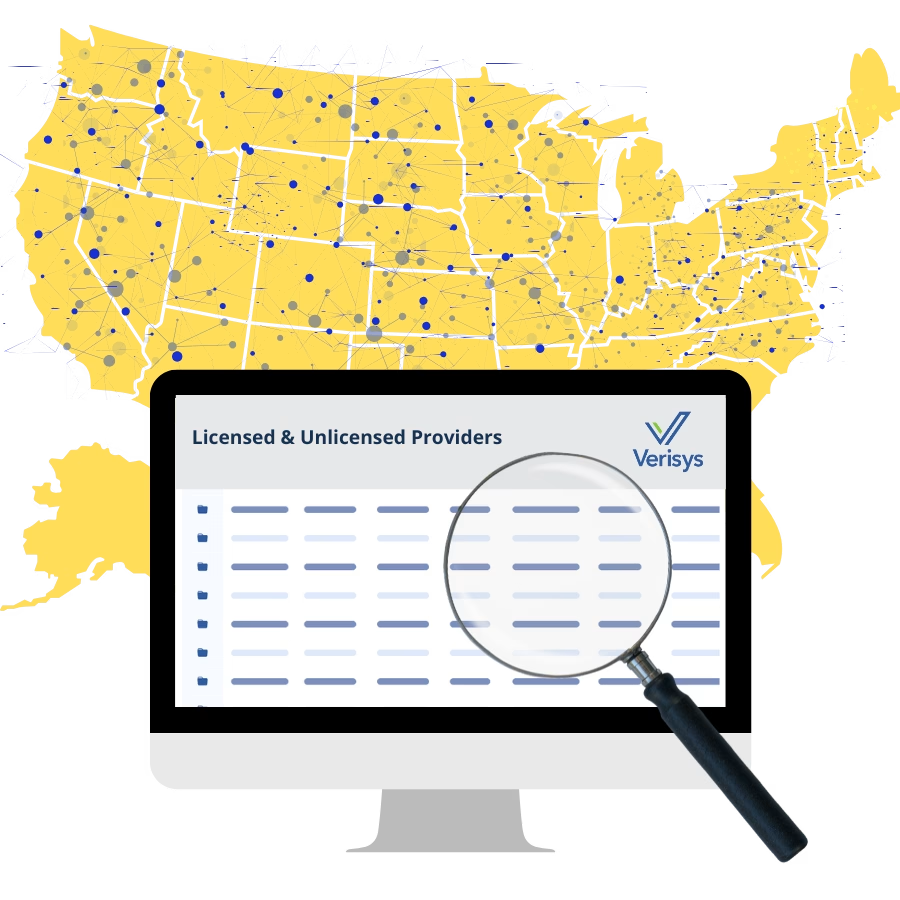
Automated credentialing uses advanced software, which may or may not be powered by AI, to replace manual data entry and paper-based verification with streamlined, digital processes. These systems connect directly to national databases to verify licenses in real time, track upcoming expirations, and send proactive alerts before issues arise. By centralizing all provider data in one secure platform, organizations can speed up enrollment, reduce errors, and maintain continuous compliance with CMS, The Joint Commission, and other regulatory agencies. The result is faster onboarding, fewer administrative bottlenecks, and more time for staff to focus on patient care.
Keeping Documents Current and Audit-Ready
Credentialing hinges on the accuracy and completeness of provider records. Maintaining an organized, centralized repository for all licenses, certifications, malpractice policies, and training records can ensure that information is easy to retrieve and can be updated as needed. All relevant changes, including new certifications, changes in practice location, or renewals of malpractice coverage, should be updated and logged immediately.
This not only accelerates re-credentializing but also reduces the stress of last-minute scrambling during payer audits or accreditation reviews. Optimal organization can further demonstrate compliance with the CMC, Joint Commission, and insurers, strengthening both operational efficiency and professional credibility.
Partner With Credentialing Services
Outsourcing to a credentialing verification organization (CVO) or other specialized credentialing service can offer a cost-effective way of managing this complex and, at times, daunting process. These partners can offer expertise in payer requirements, regulatory compliance, and document verification, ensuring that applications are error-free and complete prior to submission. Some may also offer ongoing monitoring and re-credentializing, reducing the risk of lapses.
By delegating credentialing tasks to dedicated professionals, practices can focus more on patient care and strategic growth while still maintaining confidence that their payer enrollments and compliance obligations are being handled with precision and timeliness.
Conclusion: Protecting Your Practice Through Credentialing
Insurance credentialing lays the foundation for a provider’s compliance, reputation, and financial stability. When done right, it keeps reimbursements flowing, ensures continued patient access, and safeguards against regulatory penalties or setbacks.
Verisys helps healthcare organizations achieve this with advanced automation, real-time license verification, and expert support tailored to payer requirements. By partnering with Verisys, you can streamline credentialing, reduce administrative strain, and maintain the highest standard of care.
Sources:
- StatPearls [Internet]. Credentialing. https://www.ncbi.nlm.nih.gov/books/NBK519504
- CMS. Credentialing by Medicare Advantage Organizations. https://downloads.cms.gov/events/docs/conference_id_570/credentialingproviders.pdf
- Verisys. Avoiding Costly Credentialing Issues in Healthcare. https://verisys.com/blog/avoiding-costly-credentialing-issues-healthcare/
- CMS. Avoiding Processing Delays. https://www.cms.gov/Medicare/Provider-Enrollment-and-Certification/MedicareProviderSupEnroll/Downloads/Avoid_Processing_Delays.pdf