Governance in healthcare exists to keep the patient safe. It is the glue that keeps the different departments of the healthcare organization working correctly for the greater good of the patient. Good governance is necessary and should be optimized at all times to ensure patient safety.
What Is Healthcare Governance?
Healthcare governance is the network of systems, processes, and practices by which healthcare organizations are supervised and managed to meet organizational goals. It includes organizational governance and clinical governance. Organizational governance involves the management and direction of the non-clinical departments (such as legal, financial, or administrative) of a healthcare organization, making sure that all operations run seamlessly for both staff and patients. Clinical governance involves the oversight of patient care, ensuring that the patient is safe and risk is minimized to the barest minimum possible.
Governance in healthcare is guided by key principles that determine how healthcare organizations are run. The common principles found in most, if not all governance definitions include:
- Participation
- Openness and transparency
- Accountability
- Effectiveness and efficiency
Participation
All relevant stakeholders must be given the opportunity to participate in planning, implementation, and reviews. The stakeholders are not just the board members and executives. Patients, patient relatives, healthcare workers, and even the community are stakeholders in a healthcare organization. Patients and community members can participate using surveys and representation on forums.
Openness and Transparency
Information should be clear, accessible, and accurate. Cost of services offered, risks of procedures, and clear policies are examples of some information that should be easily available to patients and other stakeholders without infringing on confidentiality laws.
Accountability
Accountability is measured by the presence of organizational goals, metrics to track those goals, and penalties for staff when those goals are not met. Service must be delivered according to legal and professional standards. Relevant stakeholders must be involved in the decision-making processes of the organization. Finances must be monitored and reported on regularly. For these and other functions, a person or department must be held responsible.
Effectiveness and Efficiency
Governance in healthcare is effective when organizational goals are met. It is efficient when organizational goals are met with minimal waste of resources. Together, effectiveness and efficiency describe a way for the organization to achieve the best results with the best use of available resources. Quality is never compromised.
For instance, healthcare organizations now turn to provider credentialing solutions as the most efficient way to complete the credentialing process.
Governance Structures and Stakeholders
Boards make policies, important decisions, and supervise, but do not manage the organization. Some of their key responsibilities include selecting, managing, and assessing the performance of the Chief Executive Officer, defining the vision and mission of the organization, and establishing accountability with all stakeholders.
Executives of healthcare organizations manage the day-to-day responsibilities of the organization. They are responsible for implementing the policies and decisions taken by the board. They also have to report to the board on their progress and results.
Committees manage the affairs of a particular area of the organization, such as ethics, finance, or audit and risk. The specific responsibilities of a committee depend on what area it oversees.
When everyone at every level of governance has and understands their roles and responsibilities, it makes for an efficient governance process. Understanding what is expected reduces the possibility of overlap and ensures a clear line of accountability. Committees are accountable to executives, executives to the board, and the board to the stakeholders and the public.
Governance and Regulatory Compliance
Governance ensures that the healthcare organization offers a high and standardized quality of care within the parameters of the law.
It is the responsibility of the board to keep up with these standards, maintaining healthcare compliance at all times. The executives and committees implement these standards.
Hospital governance mitigates risk by:
- Maintaining regulatory compliance at all levels
- Ensuring someone is accountable for risk at every level and department
- Monitoring risk red flags
- Creating systems to recognize, assess, and respond to risks at all levels.
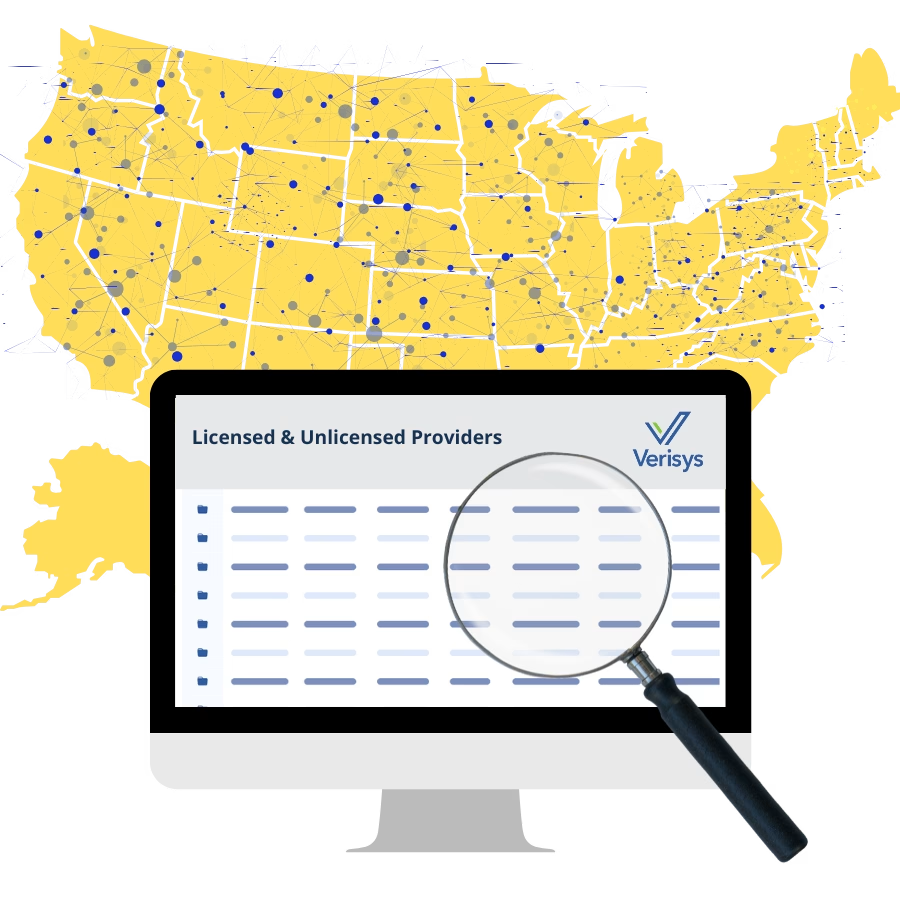
Healthcare provider data verification solutions, like Verisys help healthcare facilities in mitigating risk by automating provider license verification and monitoring in all American states and jurisdictions.
Ethics and Organizational Integrity
Healthcare is a highly regulated industry that requires solid, ethical leadership. Such leadership is marked by the leader’s ability to guide the organization towards achieving its goals, make ethical decisions, and craft a safe, growth-driven culture for everyone.
Leaders are role models in an organization. Their behavior sets the tone for how others act. Installing integrity as a culture pillar in the healthcare organization is not one person’s job. But it is something that is created when the team observes the leader making ethical decisions, especially in compliance with legal and accreditation standards, over and over again. With time, it becomes clear that it is a standard and an expectation at that organization. This is how organizational culture is formed.
Besides what we have already gone over in this article, governance promotes patient safety and trust by taking feedback from patients and using that information to adjust future behavior. Boards maintain regulatory compliance and make policies that mitigate risk and promote patient safety. Executives and committees implement these policies and act on patient feedback. Every staff member has clear roles and responsibilities that they can be held accountable for.
With these and strong leadership modeling ethical behavior, patient safety and trust are maintained.
Emerging Trends in Healthcare Governance
Technology like data analytics and reporting tools automates the process of governance by making data-driven decisions faster. Verisys, for instance, uses its Fraud Abuse Control Information System (FACIS) to access over ten million provider records from over 3000 primary sources. It is a healthcare provider credentialing solution that helps the board assess provider qualifications and performance over time. Accreditation standards are easier to check and comply with using hospital credentialing software services. Centralized datasets make information access and verification easier.
Reflecting the different backgrounds and lived experiences of people who exist in our society in healthcare governance builds public trust in the institution and is one way to tackle disparities in healthcare access and administration. It is a move to make sure everyone has the same access to healthcare regardless of their race, sexual orientation, gender, physical disability status, immigration status, and socioeconomic level.
Best Practices for Strengthening Governance
Having policies written down and strictly implemented creates a consistent way of practice across all staff. This builds a culture of ethical behavior and patient safety. Oversight mechanisms like quality assurance committees ensure these policies are carried out to the letter and can hold people accountable for any errors in practice.
Regular training of healthcare workers in governance builds their capacity to lead and reinforces their understanding of their roles. It builds a culture of growth and improvement and also keeps both staff and leaders informed on industry and regulatory standard changes.
Performance evaluation holds individuals accountable for their actions, especially concerning ethical behavior and adherence to laid-down policies and guidelines. It is also an opportunity for feedback on the reality of the practice of organizational policies and possible areas for improvement.
Conclusion: Preparing for Governance Challenges in 2026
As the healthcare industry continues to navigate strict regulation at multiple levels, governance in healthcare keeps all the parts of a healthcare organization in check. With effective stakeholder engagement, free flow of information, responsible staff, and optimal use of resources to achieve the best results, healthcare governance keeps the organization running safely.
Leadership as a tool for shaping organizational culture has never been more important. Every healthcare organization needs a strong leader who can identify and mitigate risks before they occur and shape a culture of continuous improvement by encouraging regular staff training.
Sources:
ResearchGate, The Principles of Good Governance in Health Services
National Library of Medicine, Health System Governance Evaluation: A Scoping Review
https://pmc.ncbi.nlm.nih.gov/articles/PMC10113585/
SpringerLink, Governance in Healthcare
https://link.springer.com/chapter/10.1007/978-3-031-68722-8_9
BMC Health Services Research, Hospital governance accountability structure: a scoping review
https://bmchealthservres.biomedcentral.com/articles/10.1186/s12913-023-10135-0
HIPAA Journal, What is Healthcare Regulatory Compliance? 2025 Update
https://www.hipaajournal.com/healthcare-regulatory-compliance/
ResearchGate, Leadership and Ethical Decision-Making in Healthcare Management
National Library of Medicine, Improving patient safety governance and systems through learning from successes and failures: qualitative surveys and interviews with international experts
https://pmc.ncbi.nlm.nih.gov/articles/PMC10656601/
National Library of Medicine, The Importance of Diversity and Inclusion in the Healthcare Workforce
https://pmc.ncbi.nlm.nih.gov/articles/PMC7387183/