Provider eligibility in workers’ compensation is not just a credentialing requirement. It directly determines whether a claim can be paid.
When eligibility is not verified accurately and continuously, organizations risk reimbursing ineligible providers, triggering regulatory violations and unrecoverable financial loss.
In a system where filing and payment decisions are tightly linked, even a single oversight can impact multiple claims, disrupt reporting and filing processes, and expose both the employer’s and insurance carrier’s operations to risk.
This guide explains what provider eligibility means in the workers’ compensation context, the specific criteria that determine it, and how organizations can verify and monitor eligibility at scale to prevent fraud, protect patients, and satisfy regulatory obligations.
What Is Provider Eligibility in Workers’ Compensation?
Provider eligibility refers to the specific criteria a healthcare professional must meet to treat injured workers and receive payment under a workers’ compensation program. These criteria typically include:
- Active licensure
- Proper authorization
- Clearance from sanctions lists
This concept differs from employee eligibility, which determines whether a worker qualifies for workers’ compensation benefits after a workplace injury. This article focuses specifically on the provider side of the equation.
Governing provider eligibility involves multiple layers. State law, such as New York’s Workers’ Compensation Law § 13-b, which prohibits any person from treating injured workers without authorization, payer network requirements, and federal exclusion rules all play a role. This creates a complex compliance obligation for organizations managing provider relationships across the workers’ compensation system.
If provider eligibility is not validated correctly, organizations may process claims tied to ineligible practitioners, leading to denied reimbursements, audit findings, and disruptions in the claims lifecycle.
Why Provider Eligibility Is Critical for Workers’ Compensation Claims
Organizations must prioritize eligibility verification to protect injured workers, prevent fraud, and satisfy regulatory obligations.
Ensuring Proper Medical Treatment
Eligibility requirements exist to guarantee that injured workers receive medical care from qualified professionals. Licensed, credentialed practitioners deliver the specialized treatment that workplace injuries often demand.
Certain states impose additional authorization standards. New York and Ohio, for example, require providers to meet specific licensing, certification, or accreditation requirements before treating occupational injuries or non-emergency cases under workers’ compensation insurance.
Preventing Fraud and Abuse
Reimbursing ineligible providers, who hold revoked licenses or active sanctions, creates serious financial risks. Improper payments are often unrecoverable, directly impacting the insurance company or carrier responsible for processing claims and increasing long-term costs across the system.
Workers’ compensation fraud costs insurers between $35 billion and $44 billion each year, making healthcare fraud prevention a priority. Verifying practitioner credentials serves as a critical defense against claims paid to unqualified or excluded individuals.
Meeting State Workers’ Compensation Regulations
State regulations require employers to carry workers’ compensation and establish clear rules for reporting the injury, deadlines for reporting, and filing a workers’ compensation claim. These criteria vary significantly from one jurisdiction to another.
Federal exclusions add another layer, prohibiting payment to certain providers regardless of state authorization. Failure to align provider eligibility with regulatory requirements can invalidate claims, delay filing, and expose organizations to penalties or corrective action.
Key Factors That Determine Provider Eligibility
Several specific criteria must be confirmed before a healthcare professional can treat injured workers or receive reimbursement.
Active Professional Licensure
Every practitioner must hold a current, valid license in the state where treatment occurs. Standards differ by provider type, whether physicians, chiropractors, physical therapists, or nurse practitioners.
License status can change unexpectedly through expirations, suspensions, or revocations. Organizations can use healthcare license verification to confirm licensure in real time rather than manually checking individual state board portals.
Sanctions or Disciplinary Actions
Providers must be cleared from federal and state sanctions lists, including exclusions that prohibit participation in federally funded programs.
Thorough healthcare sanction screening of OIG exclusions, SAM debarments, and state-level board disciplinary actions directly affects qualification determinations. Even partial disciplinary actions, such as restrictions tied to job duties, may affect eligibility.
Some disciplinary actions fall short of full exclusion. Consent orders or practice restrictions may still disqualify a practitioner from workers’ compensation network participation. Organizations benefit from exclusion monitoring to track these changes continuously.
Network Participation Requirements
In addition to regulatory standards, workers’ compensation insurers and managed care organizations impose provider credentialing. These internal standards reflect each payer’s risk tolerance and quality expectations.
Common criteria include:
- Board certification verification
- Malpractice history review
- Ongoing performance monitoring
Eligibility is not just regulatory, it is also contractual. Missing these requirements can disrupt claim processing and provider reimbursement.
Healthcare credentialing solutions help organizations manage these multi-layered participation standards.
State-Specific Workers’ Compensation Rules
Some states require separate workers’ compensation board authorization, while others permit any licensed practitioner to treat injured workers. This inconsistency creates challenges for employers managing networks across multiple jurisdictions.
Understanding each state’s unique standards is essential. Multi-state operations face particular difficulty maintaining compliance without centralized provider data management.
Risks of Using Ineligible Providers
Engaging practitioners who fail to meet qualification standards exposes organizations to severe consequences of non-compliance:
- Regulatory penalties – State regulators and federal agencies like the OIG may impose fines, corrective action plans, or audit findings. Ohio’s Administrative Code, for example, authorizes the bureau administrator to decertify a provider who fails to comply with workers’ compensation statutes or rules.
- Financial losses – Claims paid to ineligible practitioners often cannot be recovered, directly undermining payment integrity.
- Patient safety concerns – Professionals lacking proper qualifications may deliver substandard care for work-related injuries requiring specialized medical treatment.
Each missed verification increases exposure across the entire claims process, from reporting and filing to final reimbursement.
How Organizations Verify Provider Eligibility
Standard verification involves several essential steps:
- Licensure confirmation – Checking current status with relevant state boards
- Exclusion screening – Reviewing federal and state sanctions lists
- Authorization validation – Confirming workers’ compensation board approval where required
- Network credentialing – Verifying compliance with payer-specific criteria
Verification must occur at initial enrollment and continue on an ongoing basis. Healthcare workforce management solutions consolidate these steps into unified workflows, reducing the burden of checking each portal individually.
Challenges of Manual Eligibility Verification
Manual verification processes create three persistent obstacles:
- Fragmented data sources – Licensure, sanctions, and authorization information exists across hundreds of state board portals and federal databases with no unified access point.
- Point-in-time gaps – Periodic checks at credentialing or recredentialing miss mid-cycle changes like new sanctions or license expirations.
- Multi-state complexity – Each jurisdiction maintains its own rules, databases, and update deadlines, making scale nearly impossible through manual effort alone.
How Automated Verification and Licensure Monitoring Improve Compliance
Solutions utilizing automated credentialing consolidate licensure, sanctions, exclusions, and authorization data into unified portals. This integration eliminates the need to navigate dozens of separate sources.
Continuous monitoring marks a major step forward from periodic manual checks. By automatically alerting teams to changes in a practitioner’s status, healthcare compliance monitoring helps close the gaps left by manual processes.
Automation also strengthens payment integrity by identifying qualification issues before claims are paid rather than discovering problems during retrospective audits.
Best Practices for Maintaining an Eligible Provider Network
Organizations can strengthen their eligibility management through several proven approaches:
- Document clear criteria – Establish standards incorporating both state workers’ compensation authorization rules and federal exclusion requirements.
- Verify continuously – Initial enrollment checks are necessary but insufficient. Ongoing monitoring catches changes between credentialing cycles.
- Centralize provider data – Consolidate licensure, sanctions, exclusions, and network status into a single authoritative source to ensure provider data accuracy.
- Integrate with claims workflows – Flag ineligible practitioners before payment issuance using healthcare background screening capabilities.
These practices support consistent verification across all provider types, including federal employees, contractors, and network participants.
Strengthening Workers’ Compensation Programs Through Proper Provider Verification
Provider eligibility is a foundational requirement within workers’ compensation programs, directly influencing claim approval, payment, and compliance outcomes.
As the regulatory landscape evolves and claims complexity increases, organizations must move beyond manual verification toward continuous, data-driven oversight.
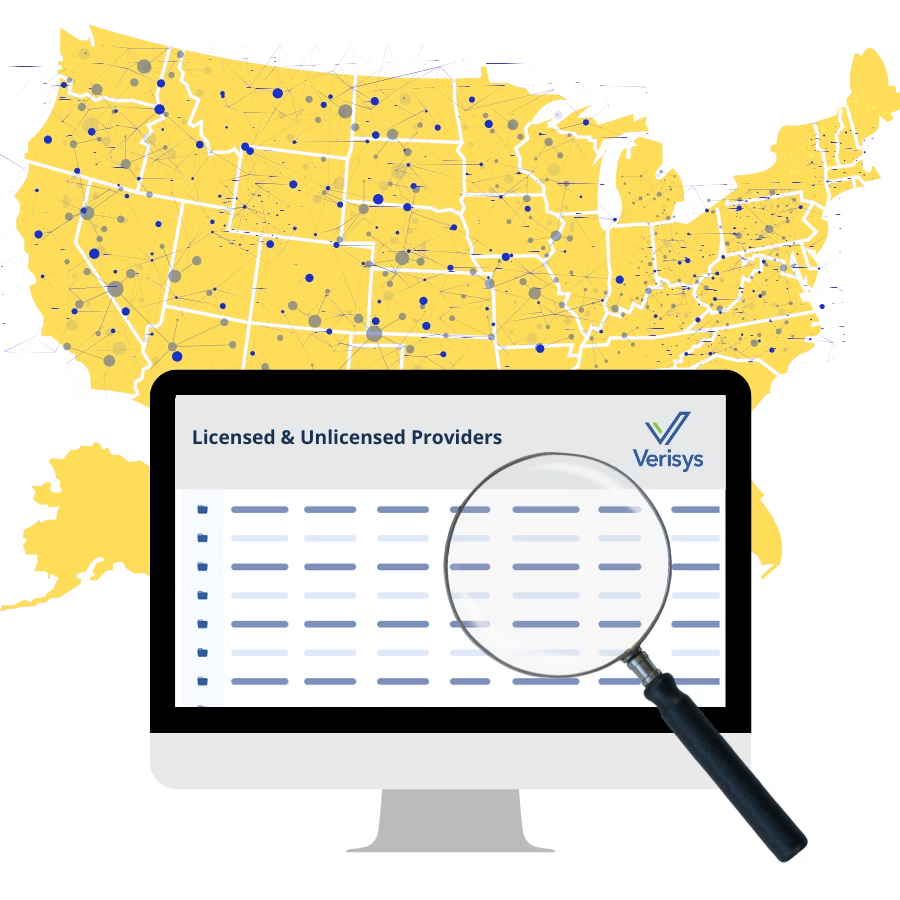
Verisys provides real-time, verified healthcare provider data for compliance, credentialing, and risk management. The platform aggregates and verifies data across licensure, sanctions, exclusions, debarments, and other regulatory sources.
With support for credentialing, ongoing monitoring, and payment integrity workflows across all U.S. jurisdictions, Verisys helps organizations reduce risk, streamline operations, and support safer patient outcomes.
Sources
- New York State Workers’ Compensation Board. Subject Number 046-1750 January 2025 Removals from the List of Authorized Health Care Providers. https://www.wcb.ny.gov/content/main/SubjectNos/sn046_1750.jsp
- Ohio Administrative Code. Ohio Administrative Code Rule 4123-6-02.2 Provider access to the HPP – provider certification criteria. https://codes.ohio.gov/assets/laws/administrative-code/authenticated/4123/0/6/4123-6-02-2_20240415.pdf
- Insurance Business Magazine. Revealed – Workers’ comp fraud costs up to $44 billion each year. https://www.insurancebusinessmag.com/us/news/workers-comp/revealed–workers-comp-fraud-costs-up-to-44-billion-each-year-530050.aspx
- Ohio Administrative Code. Ohio Administrative Code Rule 4123-6-02.5 Provider access to the HPP – provider not certified. https://codes.ohio.gov/assets/laws/administrative-code/authenticated/4123/0/6/4123-6-02-5_20251101.pdf