Provider data quality is a fundamental necessity for the healthcare industry.
In a high-stakes environment, like a hospital emergency room, efficiency and accuracy in staffing ensure that qualified medical professionals are available to provide immediate, high-quality care. Similarly, insurance companies that process thousands of claims daily require up-to-date provider information to avoid claims delays and denials.
Healthcare executives and compliance officers must consistently update and verify provider data to enhance patient care, adhere to regulatory standards, and streamline administrative tasks. Optimize your provider data by understanding its significance and adopting the best practices below.
What Is Provider Data Quality?
Provider data quality refers to the accuracy, maintenance, and completeness of information related to all healthcare providers such as doctors, nurses, radiologists, dentists, chiropractors, and others.
Stored data includes:
- Names
- Addresses
- Phone numbers
- Emails
- DEA numbers
- NPI numbers
- Credentials and licensures
- Specialties
- Work histories
- Affiliations
- Accepted insurances
Why Provider Data Quality Matters
Gaps or errors in provider data, such as a provider being listed under the wrong specialty or location, can produce inefficiencies in healthcare operations and cause potential harm to patients.
When this data is well-managed, healthcare facilities can confidently assign specialists to patients, insurers can process claims seamlessly, and patients can trust that they will receive quality care from qualified professionals.
Improving Patient Care
Consider a scenario where a patient is referred to a specialist, only to find out upon arrival that the doctor no longer practices at that location. Not only is this frustrating, but it delays care and erodes trust in the healthcare system.
A well-maintained database with accurate provider data—including specialties, contact information, and practice locations—ensures patients receive timely, appropriate treatment from credentialed professionals.
Supporting Healthcare Compliance
Healthcare facilities must comply with a myriad of legal and regulatory standards set by accreditation bodies that oversee general medical practices, including the maintenance of quality provider data. Such establishments include:
- The Centers for Medicare and Medicaid Services (CMA)
- The Joint Commission
- Commission on Accreditation of Rehabilitation Facilities (CARF)
To comply, hospitals must verify that practitioner licenses are active, credentials and contact information are up to date, and no disciplinary actions have been taken against providers.
Failure to comply with these standards can lead to fines and may even jeopardize an organization’s ability to operate.
Optimizing Healthcare Operations
Just as accurate dosages, precise diagnoses, and up-to-date treatment plans are critical in medical practice, every detail in provider data matters.
Imagine an insurance claim being denied because the provider’s name was entered incorrectly, or a hospital administrator spending hours verifying a physician’s credentials manually. These inefficiencies add up, draining resources and increasing operational costs.
Alternatively, high-quality provider data:
- Streamlines workflows
- Reduces administrative burdens
- Prevents costly errors
Challenges to Maintaining High-Quality Provider Data
The pace on the hospital floor can be relentless, and administrative details can easily be overlooked. A nurse, juggling multiple patients, may neglect to verify whether an insurance provider covers an IUD procedure for her 20-year-old patient or fail to provide a practitioner’s updated contact information, based on a previous oversight.
Preventing documentation from falling through the cracks can help ensure patients receive the medical care they deserve.
Inconsistent Data Entry
When different departments fail to input provider data accurately or input provider details without a standardized process, inconsistencies emerge: misspelled names, incorrect NPI numbers, or missing credentials.
These small discrepancies can cause major disruptions down the line, from billing issues to compliance violations.
Data Duplication and Redundancy
Duplicate records can create real risks: A provider may be listed multiple times under slightly different names, leading to confusion about their actual credentials or specialty and causing delays in patient care.
Inadequate Data Validation
Without proper validation processes, organizations risk relying on outdated or incorrect information.
Consider a hospital hiring a new physician based on an old record that doesn’t reflect a recent malpractice claim—this oversight can lead to severe legal and reputational consequences.
Best Practices for Ensuring Provider Data Quality
To properly maintain provider data quality, facilities must regularly assess, standardize, and update their data storage policies and practices.
Regular Audits and Data Cleaning
By systematically reviewing provider records, organizations can ensure accurate provider details and:
- Catch inconsistencies
- Remove duplicates
- Update outdated information
Data Standardization
Implementing standardized data entry practices can reduce inconsistencies across specialties and departments.
For example, requiring all names to follow a “Last Name, First Name” format and license numbers to be entered uniformly can prevent mismatches.
Leveraging Technology for Data Quality
AI-driven tools and automation are transforming provider data management, helping to:
- Flag inconsistencies
- Detect outdated records
- Cross-check licensing boards in real time
How Verisys Ensures High-Quality Provider Data
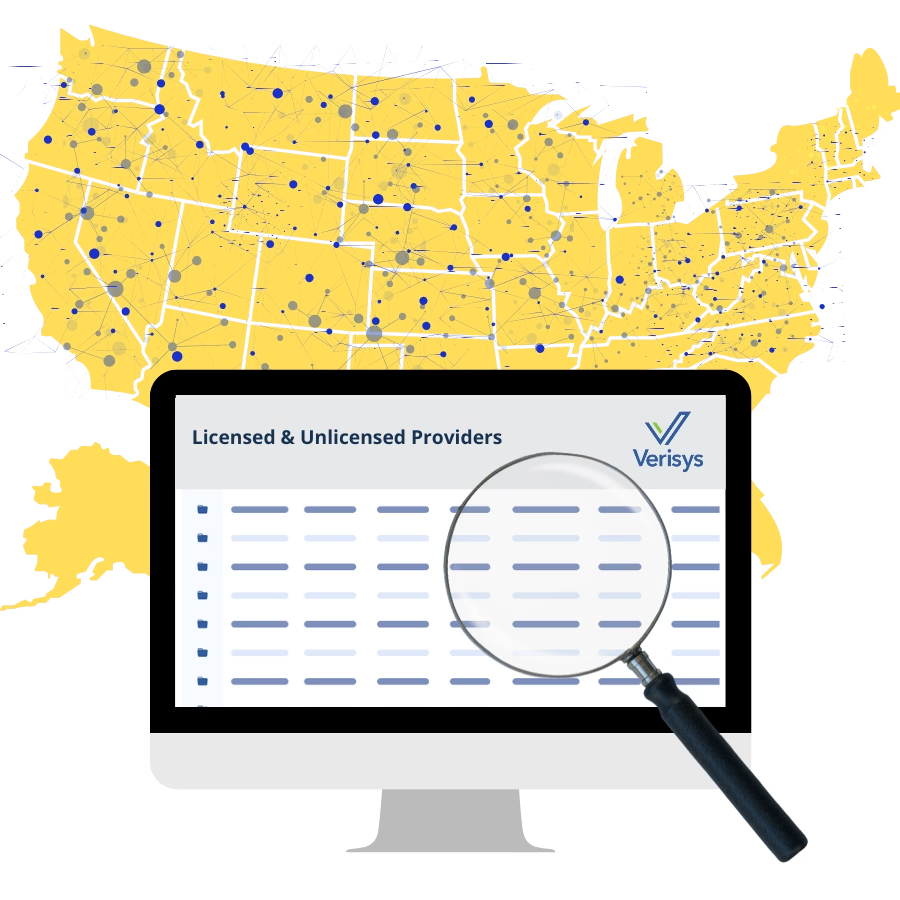
Verisys helps healthcare organizations improve provider data accuracy and compliance through provider data verification, healthcare credentialing solutions, and comprehensive healthcare provider datasets. By partnering with hospitals, insurance providers, and credentialing organizations, Verisys simplifies provider data management with AI-driven solutions, including:
- Real-Time Provider Data Verification: Continuously monitoring licensures, certifications, and credentials to ensure provider records are accurate and up to date.
- Healthcare Credentialing Solutions: Streamlining credentialing and compliance processes to meet industry regulations, reduce administrative burdens, and improve operational efficiency.
- Comprehensive Healthcare Provider Datasets: Collecting and integrating provider data from sources like medical boards, NPI registries, and affiliations to build accurate and reliable provider profiles.
- Regulatory Compliance Support: Ensuring organizations stay compliant with CMS, NCCI, and other governing bodies by maintaining accurate provider directories and up-to-date credentialing records.
Maintaining High-Quality Provider Data for Healthcare Success
Every patient, provider, and healthcare administrator relies on accurate provider data. Whether it’s ensuring patients receive care from the right specialists, preventing compliance violations, or streamlining operations, high-quality provider data is at the heart of a functioning healthcare system.
With Verisys, organizations gain access to real-time provider verification, healthcare provider data solutions, cutting-edge automation, and industry expertise to keep provider data current and accurate. Investing in provider data quality isn’t just about compliance—it’s about building a safer, more efficient, and more trustworthy healthcare ecosystem.
Sources:
Doctors Management. Guide to Healthcare Compliance. https://www.doctorsmanagement.com/blog/guide-to-healthcare-compliance/