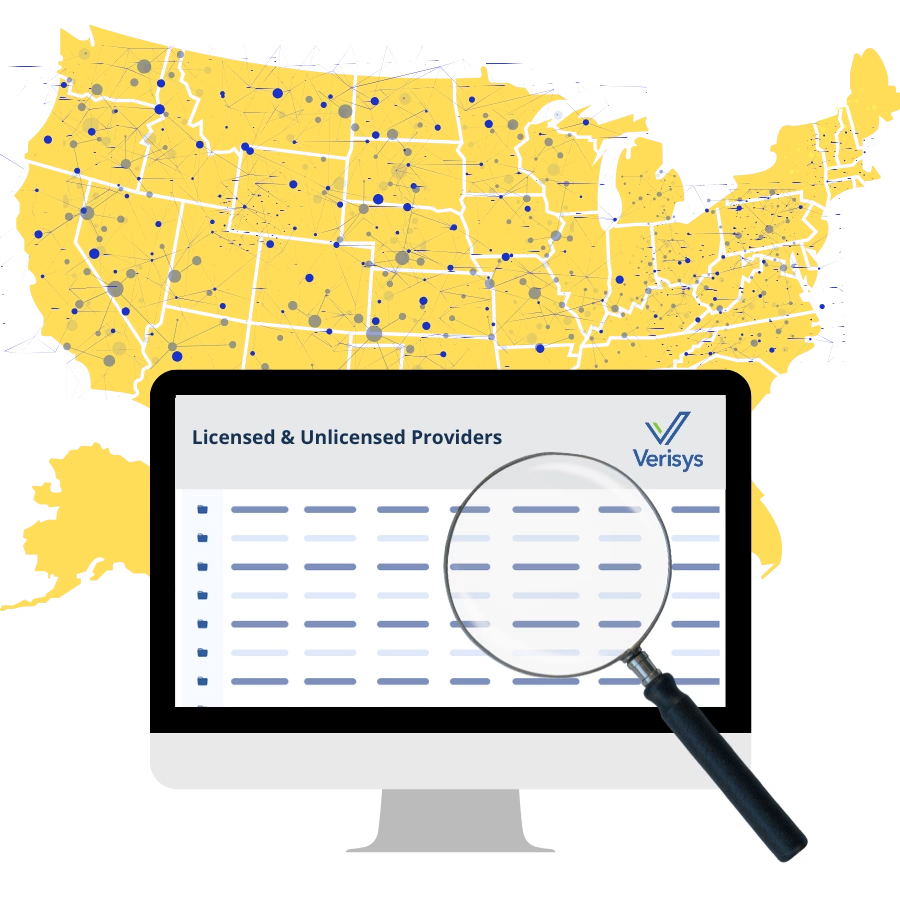
Provider and entity credentialing verifies that healthcare practitioners, facilities, and business entities meet the qualifications, licensure, enrollment, certification, and compliance requirements needed to participate in patient care, network, employment, contracting, referral, or reimbursement workflows.
Credentialing issues in healthcare consistently disrupt operations, delay revenue, increase provider and entity abrasion, and create compliance exposure for healthcare organizations. These challenges become more complex at enterprise scale, where teams must manage large provider populations, facilities, business entities, multiple jurisdictions, changing primary sources, and ongoing monitoring requirements.
Most credentialing problems trace back to fragmented provider and entity data, manual workflows, and disconnected systems. Teams may need to manage applications, request missing information, correspond with providers and entities, complete primary source verification, track expirables, prepare committee files, and monitor status changes across multiple platforms. This guide explains how verified provider and entity data, automated credentialing workflows, primary-source monitoring, FACIS® sanctions screening, and flexible data delivery can help resolve common credentialing challenges at scale.
Why Enterprise Credentialing Is Increasingly Complex
Large health plans, health systems, pharmacies, and provider networks must verify qualifications and compliance status across both individual providers and healthcare entities. That may include physicians, nurses, pharmacists, allied professionals, facilities, clinics, groups, vendors, contractors, and other business entities connected to care delivery, network participation, or reimbursement.
Each provider or entity may be tied to different licenses, certifications, affiliations, jurisdictions, payer requirements, sanctions sources, exclusion lists, and monitoring obligations. A single missing license update, unresolved adverse action, entity-level exclusion, or outdated credentialing record can create delays, audit findings, compliance risk, or payment issues.
Entity credentialing adds another layer of complexity because organizations must evaluate more than an individual’s professional standing. They may also need to understand facility status, business entity records, organizational affiliations, parent or sister company relationships, and current or historical risk indicators.
The Most Common Credentialing Challenges Healthcare Providers Face
Avoiding costly credentialing issues requires addressing the challenges that consistently disrupt operations and create compliance exposure.
Delays in Provider Onboarding
When evaluating how long credentialing takes, the typical provider credentialing timeline spans 90 to 120 days. Without provider onboarding best practices, the process extends even further.
Common causes of delays include:
- Missing documents and incomplete applications
- Slow responses from licensing boards
- Lack of standardized verification processes
Credentialing delays can create significant financial consequences for both providers and healthcare organizations. Research has found that physicians and surgeons may lose more than $122,000 in potential earnings while waiting to become credentialed, while health systems and health plans face delayed reimbursement, reduced provider capacity, and network access challenges.
Understanding the distinction between payer enrollment vs credentialing matters here. Delays in either process prevent reimbursement and compound financial impact.
Entity Credentialing Is Often Overlooked
Many credentialing workflows focus heavily on individual practitioners, but entity credentialing creates a separate layer of operational and compliance risk. Facilities, groups, vendors, contractors, delegated entities, and other healthcare business entities may have their own licenses, certifications, ownership structures, affiliations, sanctions, exclusions, and regulatory requirements.
Entity credentialing can help organizations evaluate:
- Facility and group standing
- Vendor and contractor eligibility
- Delegated entity oversight
- Business entity sanctions or exclusions
- Parent, sister, or affiliated entity risk
- Supply chain compliance exposure
Inaccurate or Incomplete Provider Data
Simple errors derail credentialing applications and trigger rejections requiring resubmission. Missing certification documentation worsens these problems.
Common data accuracy issues:
- Misspelled names and transposed license numbers
- Outdated addresses and contact information
- Gaps in malpractice history documentation
- Manual data entry errors and lack of primary source verification
- Inconsistent provider records across systems
Maintaining provider data accuracy requires moving away from manual data entry and implementing verification against primary sources.
Compliance and Audit Risks
Failed audits from The Joint Commission, NCQA, URAC, or CMS can carry serious consequences of non-compliance. Compliance risks multiply when verification lacks documentation, when primary source checks are inconsistent, or when credentialing programs overlook entity-level requirements.
Potential consequences include:
- Financial penalties, accreditation challenges, and increased regulatory scrutiny
- Suspended billing privileges
- Reputational harm and network exclusion
- Delayed provider or entity participation
- Gaps in delegated oversight
- Missed facility, vendor, contractor, or business entity risk
Preparing for healthcare compliance audits requires more than storing files. Healthcare organizations must demonstrate systematic verification processes, complete documentation trails, and ongoing monitoring for both providers and entities. This includes individual practitioner credentials as well as facility, vendor, contractor, delegated entity, and business entity standing.
Managing Fragmented Credentialing Systems
Many organizations still rely on spreadsheets, disconnected platforms, and department-specific processes. This fragmentation creates duplicated effort, missed expiration dates, and inconsistent records across providers, facilities, vendors, contractors, and business entities.
Credentialing teams may waste time reconciling provider data while compliance, HR, medical staff services, supply chain, and network management teams maintain separate entity records. Poor communication between these systems widens visibility gaps and makes it harder to understand the full risk profile of both individuals and organizations.
A centralized provider and entity credentialing process gives teams a more complete view of licensure, sanctions, exclusions, adverse actions, expirables, affiliations, and regulatory standing across the enterprise.
Credential Expiration and Monitoring Challenges
Traditional credentialing programs often rely on point-in-time reviews, scheduled recredentialing cycles, and manual follow-up to identify changes in provider or entity status. That approach creates risk because licenses expire, board certifications lapse, malpractice coverage changes, sanctions are issued, and adverse actions can occur between scheduled reviews.
The future state of credentialing is continuous. Rather than waiting for the next recredentialing cycle, organizations are moving toward perpetual credentialing models that use ongoing monitoring, real-time alerts, and automated data updates to catch changes as they occur.
Continuous monitoring helps teams identify changes in:
- License status and expiration
- Sanctions, exclusions, and adverse actions
- DEA or CDS registration
- Board certification
- Malpractice coverage
- Provider or entity eligibility
- Scope-of-practice indicators
This shift helps credentialing, compliance, HR, medical staff services, and network management teams maintain a more current view of provider and entity standing without relying solely on manual reviews or periodic checkpoints.
Common Mistakes Organizations Make During Credentialing
Several patterns consistently undermine effective credentialing:
- Treating credentialing as a static, point-in-time process: Credentialing should not end once an initial file is complete. Provider and entity status can change between review cycles, so organizations need ongoing monitoring for license changes, sanctions, exclusions, adverse actions, expirables, and other eligibility signals.
- Relying on manual credentialing workflows: Many credentialing teams still manage applications, provider and entity correspondence, document collection, missing information follow-up, CAQH or portal updates, PSV requests, and committee preparation manually. These steps are time-consuming, difficult to scale, and prone to delays when teams depend on email, spreadsheets, phone calls, and disconnected systems.
- Accepting inconsistent credentialing workflows: When departments follow different processes, gaps often surface only during audits, committee review, or compliance investigations. Standardized workflows help teams apply the same credentialing, monitoring, and documentation requirements across providers, entities, locations, and jurisdictions.
- Checking credentials only at scheduled intervals: Because sanctions, exclusions, license changes, and other adverse events can occur continuously, healthcare exclusion screening, license monitoring, and expirable monitoring should be ongoing. Organizations that verify only during initial credentialing or recredentialing cycles may miss critical updates.
- Underusing automation for application and monitoring processes: Automation can help streamline application intake, provider and entity outreach, primary source verification, expirable tracking, adverse finding alerts, and committee preparation. This reduces manual administrative burden while helping teams maintain more current credentialing data.
Healthcare organizations experiencing these common issues can explore more effective and efficient ways to address them.
How Automation Helps Solve Credentialing Challenges
Verified provider data, primary-source monitoring, jurisdictional coverage, FACIS® sanctions screening, and flexible data delivery address credentialing problems before they become workflow exceptions.
Benefits of Centralized Credentialing Platforms
A unified platform that aggregates provider information across licensure, sanctions, exclusions, and regulatory sources eliminates data silos. This gives credentialing teams access to verified provider records that can be continuously monitored for status changes and compliance risks. Centralized systems also support eligibility screening and payment integrity workflows from the same verified data foundation.
Improving Turnaround Times and Operational Efficiency
Automated verification and monitoring solutions confirm credentials directly with licensing boards and regulatory sources while continuously tracking status changes over time. What once required months of manual outreach can now take days.
Key benefits of automation include:
- Eliminating repetitive manual tasks
- Reducing human error in data entry and verification
- Flagging exceptions that require credentialing team review
- Enabling real-time status updates and alerts
The difference between point-in-time verification and healthcare continuous monitoring determines ongoing compliance. A monitoring program should compare source updates against active provider rosters so sanctions, exclusions, and license changes trigger timely review.
Supporting Compliance with Primary-Source Verification
Working with an accredited Credentials Verification Organization through CVO credentialing reduces administrative burden while maintaining NCQA and URAC standards. NCQA notes that plans that delegate credentialing activities to accredited organizations can receive automatic credit on their Accreditation Survey, making outsourced verification a strategic compliance advantage.
Comprehensive data verification solutions generate audit trails and compliance reports that streamline accreditation reviews. Outsourcing credentialing to specialized experts can shift this administrative verification work while helping the organization maintain documented oversight.
Questions to Ask When Evaluating Credentialing Solutions
When assessing potential partners, these questions reveal capability and fit:
- Does the credentialing solution support automated primary source verification across the datasets and primary sources required for your provider population, including the National Practitioner Data Bank when applicable?
- Can the platform scale across multi-state provider networks and support all provider and entity types, including practitioners, facilities, and business entities?
- How does the system handle ongoing monitoring for sanctions, exclusions, adverse actions, license expirations, and license status changes?
- What accreditations, certifications, and security standards does the partner hold, and how does the partner document data quality?
- How frequently are provider and entity datasets refreshed, and how quickly are changes from primary sources reflected in monitoring results?
The answers to these questions can help organizations evaluate a partner’s ability to support credentialing accuracy, compliance, and scalability.

Strengthen Your Enterprise Credentialing Processes with Verisys
For enterprise networks, credentialing performance depends on whether provider data remains current across licensing, sanctions, exclusions, and payer enrollment sources. Solving credentialing challenges requires verified, real-time provider information that flows through standardized workflows with continuous monitoring. Organizations that centralize verified provider data, automate primary-source monitoring, and use jurisdiction-spanning sanctions are better positioned to support compliance at enterprise scale.
Verisys provides real-time, verified healthcare provider data solutions that address these challenges directly. By aggregating, curating, and matching provider data across licensure, sanctions, exclusions, and regulatory sources, Verisys helps organizations reduce operational risk while supporting safer patient care. With NCQA certification, URAC accreditation, FACIS® sanctions screening, ongoing monitoring, and coverage across all U.S. jurisdictions, Verisys delivers the data foundation healthcare organizations need to credential with confidence.
Sources
- NCQA. NCQA’s Credentialing Standards Help Ensure Safety and Integrity of Practitioner Networks. https://www.ncqa.org/blog/ncqas-credentialing-standards-ensure-safety-and-integrity-of-practitioner-networks/.
- TechTarget. Physicians lose the most from provider credentialing delays. https://www.techtarget.com/revcyclemanagement/news/366620979/Physicians-lose-the-most-from-provider-credentialing-delays.
- NCQA. A Comprehensive Guide to NCQA Credentialing Programs. https://wpcdn.ncqa.org/www-prod/NCQA-Credentialing-eBook-2025.pdf,