A background check confirms who a provider is at the moment of hire, but it does not confirm who they remain over time.
In the healthcare industry, that gap creates measurable risk. A provider’s license can lapse, a sanction can be issued, or a criminal background check can surface new findings after onboarding. Without ongoing visibility, healthcare organizations may continue employing individuals whose status has changed, exposing operations to compliance failures, claim denials, and reputational damage.
This article explains what continuous background checks are, why healthcare staffing demands ongoing monitoring, and the measurable benefits this approach delivers across patient safety, regulatory compliance, and operational efficiency.
What Are Continuous Background Checks in Healthcare Staffing?
Continuous monitoring replaces static checks with ongoing verification of provider status across licensure, sanctions, exclusions, and criminal history data.
Instead of relying solely on pre-employment screening or periodic reviews, this model uses continuously updated datasets to track changes in real time, including signals from sources like the sex offender registry, sanctions lists, and regulatory actions.
When a provider’s status changes, the organization receives immediate notification.
So what:
This reduces the gap between a compliance event and organizational response from months to minutes, allowing teams to identify red flags early, intervene quickly, and avoid downstream operational or financial exposure.
How Continuous Monitoring Differs from Traditional Background Checks
Healthcare organizations typically approach healthcare background screening in three distinct ways:
- Pre-employment only – A single snapshot taken before hiring, with no visibility into changes afterward
- Periodic post-hire – Annual or biannual re-checks that leave significant gaps between reviews
- Continuous monitoring – Automated alerts delivered the moment a provider’s compliance status changes
Traditional approaches treat the background screening process as a checkpoint. Continuous criminal monitoring treats it as an ongoing system.
The difference here is not frequency, it’s visibility. Continuous monitoring can help organizations act on changes as they occur, rather than discovering issues retroactively during audits or claims reviews.
Why Healthcare Staffing Requires Ongoing Screening
Healthcare staffing presents unique compliance demands. Providers often work across multiple states, move between facilities quickly, and operate under shared liability arrangements between agencies and client organizations.
Background screening in healthcare extends beyond standard HR functions. It supports patient safety, provider credentialing accuracy, payment integrity, and regulatory reporting requirements.
Why Background Checks Are Critical in Healthcare Staffing
Healthcare environments demand more rigorous screening than most industries due to the direct impact on patient welfare and regulatory accountability.
Protecting Patient Safety
Thorough background checks help prevent individuals with histories of misconduct, negligence, or patient abuse from accessing vulnerable populations. Protecting patients requires verification that providers pose no documented risk.
Maintaining Workforce Compliance
Healthcare organizations must satisfy state and federal requirements from multiple regulatory bodies. The OIG specifies that no payment will be made by any Federal health care program for items or services furnished, ordered, or prescribed by an excluded individual or entity.
Screening employees and contractors forms the foundation of regulatory compliance. Key regulators include:
- OIG – Office of Inspector General exclusion requirements
- CMS – Centers for Medicare & Medicaid Services conditions of participation
- NCQA – National Committee for Quality Assurance credentialing standards
Preventing Credential and License Issues
Verification of professional licenses and certifications confirms that providers hold valid credentials and remain in good standing. Healthcare license verification catches fraudulent or expired credentials before they create risk.
Where One-Time Background Checks Fall Short
A pre-employment background check captures only a single moment, not a timeline. After that initial screening, a provider may have their license suspended, receive a sanction, or face criminal charges without the employer’s knowledge, leading to severe consequences of non-compliance.
This creates three categories of exposure:
- Patient safety gaps – Sanctions or license lapses go undetected, allowing unqualified providers to continue delivering care
- Financial penalties – The OIG imposes Civil Monetary Penalties when organizations bill for services rendered by excluded providers. In one recent case, Action Recovery Group entered into a $73,457.42 settlement agreement with OIG for employing an individual excluded from participating in any Federal health care program
- Reputational harm – Accreditation bodies and payers lose confidence in organizations that fail to maintain compliance
Healthcare compliance monitoring bridges this gap by transforming point-in-time checks into continuous assurance.
Key Benefits of Continuous Background Monitoring
Continuous monitoring delivers measurable benefits across patient safety, regulatory compliance, and operational efficiency.
Real-Time Alerts for Sanctions and Disciplinary Actions
Continuous monitoring provides immediate notification when a provider appears on sanctions databases or faces new criminal records. This helps them take action before issues escalate into audit findings or payment recoupments.
Key monitoring sources include:
- OIG exclusion list (LEIE): Federal healthcare program exclusions
- GSA SAM: General Services Administration System for Award Management
- State Medicaid exclusion lists: State-level program exclusions
- Criminal record databases: New charges and convictions as they occur
The OIG recommends monthly healthcare exclusion screening at minimum. Continuous monitoring exceeds this standard. Organizations receive alerts the moment a provider’s status changes on the OIG exclusion list.
Ongoing License and Credential Monitoring
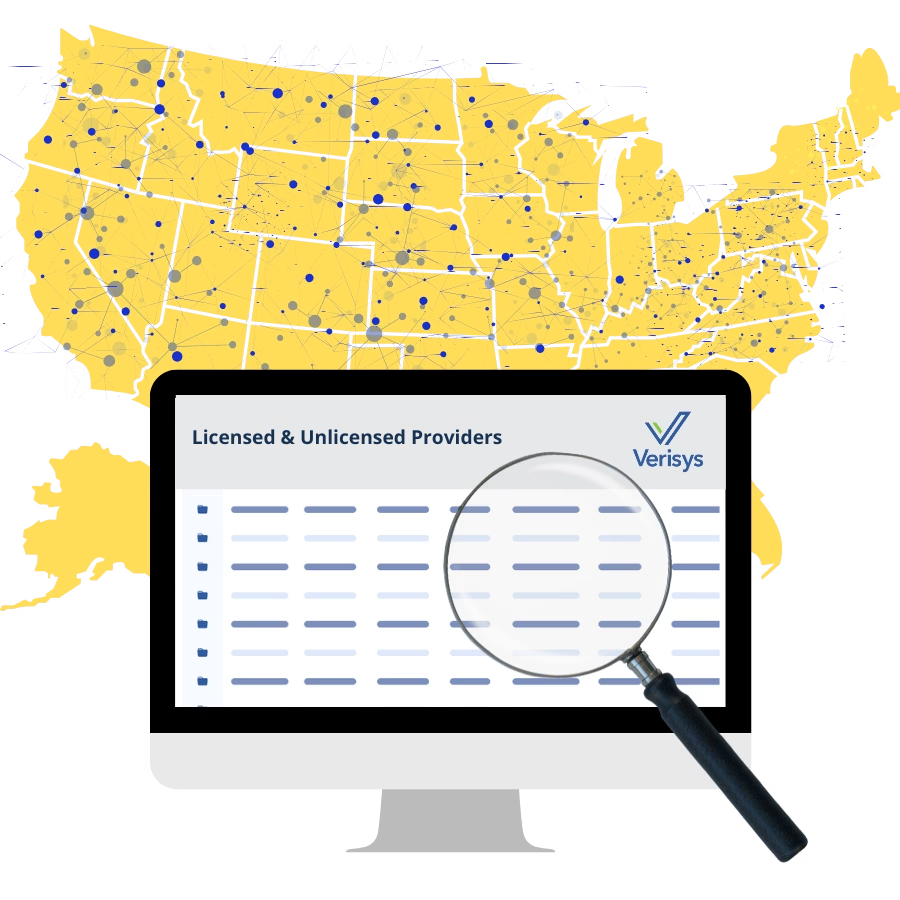
License status can shift due to expiration, suspension, revocation, or disciplinary action. Healthcare license verification monitors these changes across all U.S. states and jurisdictions automatically.
This ensures that healthcare professionals remain eligible to practice at all times, reducing reliance on manual tracking and preventing lapses that could disrupt operations or credentialing workflows.
Reduced Compliance Risk
Key regulatory frameworks drive continuous monitoring requirements. Ongoing monitoring mitigates audit findings by creating a documented, auditable compliance trail.
Organizations must address multiple compliance standards:
- OIG exclusion screening – Monthly minimum screening requirements
- CMS conditions of participation – Provider eligibility verification
- NCQA and URAC credentialing standards – Ongoing monitoring protocols
- Fair Credit Reporting Act obligations – Post-hire screening compliance
Improved Patient Trust and Safety
When every provider delivering care is verified as currently qualified, licensed, and free of sanctions, organizations demonstrate accountability to patients and payers alike. This commitment reinforces institutional trustworthiness.
Who Should Implement Continuous Background Checks?
Any organization that employs, contracts, or credentials individuals in healthcare benefits from continuous background screening.
Healthcare Staffing Agencies
Agencies face shared liability for providers they place in facilities they do not operate. Continuous monitoring ensures every provider on assignment remains compliant across all jurisdictions.
Hospitals and Health Systems
Large healthcare systems must monitor employed providers, contracted staff, and locum tenens professionals throughout their tenure. Initial credentialing alone leaves gaps that continuous monitoring addresses.
Long-Term Care Facilities
Patients in long-term care settings represent especially vulnerable populations. Continuous monitoring plays a crucial role in protecting the well-being of patients and ensuring adherence to federal and state requirements.
The CMS National Background Check Program, established under Section 6201 of the Affordable Care Act to conduct background checks on all prospective direct patient access employees of LTC facilities and providers, makes ongoing screening essential for these organizations.
Workforce management for healthcare supports eligibility and compliance workflows across all these organization types.
Challenges of Manual Monitoring
Many healthcare organizations attempting manual monitoring face significant obstacles that directly increase organizational risk.
Common challenges include:
- Fragmented data across sources
- High administrative burden
- Delayed detection of issues
- Human error
- Inconsistent documentation
- False positives
Delays in identifying issues increase exposure. Organizations relying on manual processes risk missing critical updates that could affect eligibility, claims, or patient interactions. This makes proactive risk management in healthcare essential.
How Automated Monitoring Improves Healthcare Workforce Compliance
Automated screening solutions aggregate verified data from primary sources, match it against provider records, and deliver real-time alerts when status changes occur. This eliminates the lag time inherent in manual processes.
Provider data quality matters significantly in this context, as accurate background data prevents false positives that consume staff time.
Healthcare background screening aggregates sanctions, exclusions, and debarment data across hundreds of sources for background screening organizations and compliance platforms.
Best Practices for Implementing Continuous Background Screening
Healthcare compliance and credentialing teams should follow these guidelines when adopting continuous monitoring:
- Define a clear background screening policy: Establish scope, escalation protocols, and compliance requirements
- Align with legal standards: Ensure adherence to FCRA and state regulations
- Select a healthcare-specific partner – Require coverage across all provider types and jurisdictions, comprehensive healthcare sanction screening, and security certifications such as HITRUST, SOC 2/Type 2, and ISO
- Integrate with workflows: Connect monitoring data to credentialing, HR, and compliance systems
Building a Safer Healthcare Workforce Through Continuous Monitoring
Pre-employment screening remains a foundational type of screening, but it is no longer sufficient on its own.
In a dynamic healthcare environment, conducting thorough background checks must extend beyond the hiring process into continuous oversight. Ongoing monitoring enables organizations to identify changes as they occur, maintain accurate provider records, and respond proactively to emerging risks.
The effectiveness of this approach depends on the quality and timeliness of the underlying data.
Solutions built on verified, continuously updated provider data—such as those offered by Verisys, support this model by enabling organizations to move from periodic checks to continuous assurance, strengthening workforce integrity while reducing operational and compliance risk.
Sources
- Office of Inspector General. Exclusions FAQs. https://oig.hhs.gov/faqs/exclusions-faq/
- Office of Inspector General. Action Recovery Group Agreed to Pay $73,000 for Allegedly Violating the Civil Monetary Penalties Law by Employing an Excluded Individual. https://oig.hhs.gov/fraud/enforcement/action-recovery-group-agreed-to-pay-73000-for-allegedly-violating-the-civil-monetary-penalties-law-by-employing-an-excluded-individual/
- Centers for Medicare & Medicaid Services. CMS National Background Check Program. https://www.cms.gov/medicare/enrollment-renewal/providers-suppliers/national-background-check