Behavioral health compliance has become a critical operational priority as mental health and substance treatment services continue to expand across care settings. Behavioral health organizations operate in one of the most tightly regulated areas of health care, balancing clinical quality, patient safety, reimbursement requirements, and evolving federal health care regulations.
Provider structure adds complexity. Behavioral health providers often hold multiple licenses across jurisdictions and payer programs, increasing compliance risk when verification or monitoring falls out of date, creating broader healthcare compliance issues that affect billing accuracy and audit readiness.
In this environment, behavioral health compliance depends on more than written policies. It requires accurate, real-time provider data, continuous oversight, and workflows designed to support effective compliance without slowing care delivery or administrative operations.
Why Behavioral Health Compliance Requires Specialized Oversight
Behavioral health compliance requires specialized oversight because providers operate under layered and evolving requirements, including state boards, Medicare and Medicaid rules, and federal enforcement agencies. Meeting these obligations consistently requires regulatory expertise and a dependable compliance resource, not periodic review.
Compliance gaps can quickly affect patient safety, reimbursement, and audit outcomes, often leading to well-documented healthcare non-compliance consequences. Incomplete license verification, outdated medical record documentation, or missing consent also increase exposure to audits, enforcement actions, and financial penalties, particularly where HIPAA and patient privacy standards apply.
Outdated verification processes remain a common risk. Relying on self-reported information or annual checks can delay awareness of restrictions or disciplinary updates, making regulatory intervention more likely. Effective programs involve continuous monitoring aligned to clear regulatory guideline expectations.
Here’s what strong oversight models do:
- Keep verified data easily accessible
- Support ensuring staff accountability
- Use centralized management services as a shared compliance resource to update policies as requirements change
Together, these practices help behavioral health organizations maintain trust while adapting to regulatory change.
Core Elements of Behavioral Health Compliance Programs
A strong behavioral health compliance program brings structure and consistency to an otherwise fragmented regulatory environment. Rather than treating compliance as a checklist exercise, mature programs integrate verification, monitoring, and documentation into daily operations.
This approach reflects established best practices, supported by clear policies and procedures and a defined compliance strategy that helps organizations remain compliant as requirements evolve.
Effective compliance in behavioral health typically includes:
- Multi-license provider verification
- Continuous monitoring for regulatory updates
- Clear documentation and audit trails
- Scalable workflows that support growth
These elements work together to help organizations maintain compliance standards, reduce fraud risk, and support accurate billing and reimbursement across health care programs.
And over time, these outcomes reflect the broader benefits of compliance programs in healthcare, including stronger governance, reduced operational risk, and greater confidence during audits.
Multi-License Verification and Monitoring
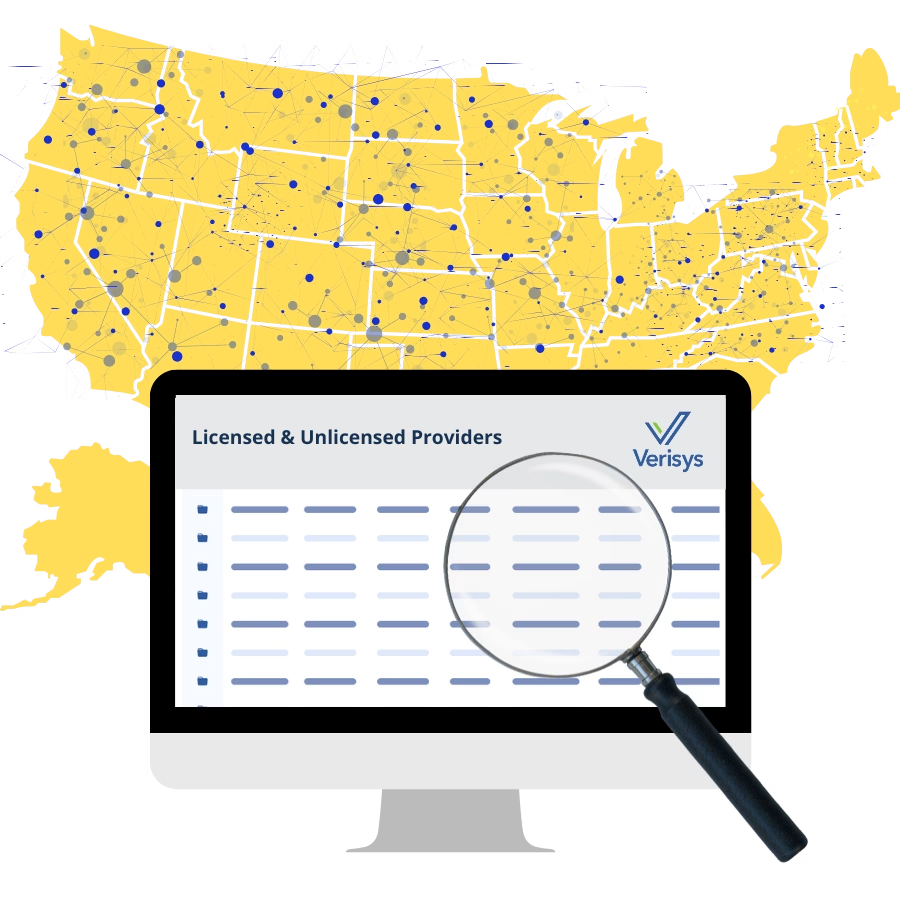
Multi-license verification is one of the most complex aspects of behavioral health compliance. Behavioral health providers may hold separate licenses for mental health counseling, substance treatment, clinical social work, or psychiatric services, often across multiple states.
Manual processes make it difficult to monitor this complexity consistently. Missed license expirations or delayed updates can create compliance challenges that affect treatment eligibility, billing accuracy, and audit outcomes.
Real-time, multi-source verification helps organizations:
- Monitor provider licenses continuously
- Identify disciplinary actions or restrictions as they occur
- Reduce compliance exposure tied to outdated information
This approach aligns with healthcare license verification solutions, where verified data supports compliance oversight and helps organizations respond quickly to regulatory changes before they escalate into enforcement actions.
Credentialing and Eligibility Validation
Credentialing plays a central role in behavioral health compliance because it confirms provider status, disciplinary history, and eligibility to participate in health care programs, helping ensure each clinician is qualified to deliver care, whether in-person or remote. Inaccurate or incomplete credentialing data can result in billing errors, denied reimbursement, or allegations of fraud.
Eligibility validation is particularly important for organizations billing Medicare or working with insurers that require strict adherence to credentialing standards. Providers must meet qualification and licensing requirements at the time services are delivered, not just annually.
Credential intelligence supports safer provider networks by helping organizations:
- Validate provider status before treatment occurs
- Identify compliance-related restrictions or exclusions
- Support accurate billing and payment integrity
This is where credentialing solutions and healthcare provider data verification solutions strengthen compliance programs by reducing reliance on self-reported documentation and supporting effective compliance oversight.
Regulatory Alignment Across Agencies
Behavioral health compliance spans multiple regulatory bodies, including state licensing boards, CMS, the OIG, and other federal health care oversight agencies. Each agency may issue updates, guidance, or enforcement actions that affect provider eligibility, billing code usage, or federally funded reimbursement rules.
Tracking these changes manually is resource-intensive and prone to error. Missed updates can lead to non-compliance, audit findings, payment delays, or a fine if organizations unknowingly violate the anti-kickback statute or submit fraudulent claims, including cases where providers have received kickbacks.
Continuous regulatory alignment helps organizations:
- Monitor cross-agency updates consistently
- Address compliance challenges proactively
- Maintain alignment with federal and state regulation
By centralizing updates and verification data, behavioral health organizations can manage compliance more effectively as regulatory requirements evolve.
Automated and Scalable Compliance Workflows
Automation is increasingly crucial for maintaining behavioral health compliance at scale. As organizations expand services across locations or states, manual systems struggle to keep pace with documentation, verification, and monitoring demands.
Automated compliance workflows help organizations:
- Reduce administrative burden and human error
- Facilitate real-time updates to provider status
- Support audit readiness and documentation consistency
Automation also enables compliance programs to scale alongside growth, supporting behavioral health organizations as they expand provider networks or service offerings. This approach aligns with healthcare exclusion screening, where continuously monitored data helps reduce fraud risk and supports payment integrity across behavioral health services.
Common Mistakes in Behavioral Health Compliance
Even mature programs encounter compliance issues as behavioral health provider networks expand. In many cases, the problem is not intent, but outdated processes that no longer fit today’s behavioral health practice or regulatory pace.
Common gaps include:
- Relying on self-reported documentation, which can miss license changes or restrictions that indicate risk to a patient’s treatment or billing accuracy
- Inconsistent monitoring across jurisdictions, particularly for services involving Medicaid patients, increasing the organization’s audit and repayment exposure
- Using systems not designed for multi-license oversight, creating documentation gaps and fraud risk across the workplace
Each of these issues carries a clear consequence, from enforcement actions to financial penalties, reinforcing the need for continuous, scalable compliance oversight.
Questions to Ask When Assessing Behavioral Compliance Tools
Selecting the right tools to support behavioral health compliance requires more than evaluating features. Organizations should focus on how well a solution supports oversight, audit readiness, and scalability.
Key questions to explore include:
- What sources do you monitor?
Behavioral health compliance depends on accurate, multi-source data that reflects state boards, federal health care agencies, and exclusion lists. - How often is data updated?
Real-time or continuously updated information is crucial for identifying changes that affect provider eligibility, billing, or treatment authorization. - Do you support multi-state and multi-license provider profiles?
Behavioral health providers often hold overlapping credentials, making comprehensive monitoring essential. - What reporting supports audits and risk assessments?
Clear documentation, audit trails, and reporting tools help organizations investigate issues, respond to enforcement actions, and demonstrate effective compliance oversight.
Asking these questions helps organizations implement tools that facilitate proactive compliance rather than reactive remediation.
Ensuring Behavioral Health Compliance With Verified Provider Data
Behavioral health compliance demands precision to match the complexity of mental health and substance treatment services. Providers operate across jurisdictions, bill multiple payers, and work under evolving regulatory expectations, making outdated data and fragmented processes a consistent source of risk.
Organizations that rely on accurate, real-time provider verification and continuous monitoring are better positioned to maintain compliance, protect reimbursement integrity, and support quality care.
This is where Verisys’ provider data compliance solutions support behavioral health organizations, through license verification, data verification, exclusion screening, and comprehensive credentialing that help manage multi-license complexity, track regulatory changes, and sustain effective compliance across behavioral health provider networks.