Healthcare fraud prevention is paramount. It’s crucial for regulatory compliance, it promotes patient safety, and it supports organizational success.
But healthcare is evolving: As new technologies enter the market, so are new fraud risks. Fraud, waste, and abuse impact every level of the healthcare system, from patients to hospital system stakeholders.
Which healthcare fraud prevention strategies are organizations using in the digital age? How do these emerging approaches address today’s challenges? In this guide, we’ll explore healthcare fraud in the modern era—one where technologies are more powerful than ever before, and where compliance has never been more critical.
What Is Healthcare Fraud?
Healthcare fraud is a broad umbrella, but, generally speaking, it describes any action that intentionally deceives or misuses a health system resource.
At the organization level, some of the most common types of fraud are:
- Billing fraud
- Identity theft
- Kickbacks or unethical financial practices
- False claims
However, it’s important to note that there’s a distinction between intentional fraud and unintentional errors:
- Intentional fraud events are malevolent actions by bad actors—people or organizations looking to misuse the system for their own gain.
- Unintentional errors, while benign, can lead to intentional theft events, healthcare compliance issues, and other potentially catastrophic consequences.
This is why methods for prevention of fraud in the healthcare system must address both intentional deception and help mitigate accidental errors (which can trigger a cascade of negative outcomes).
Why Digital Transformation Brings New Fraud Challenges
While fraud and errors have always been present in the modern healthcare system, emerging technologies have introduced additional opportunities for abuse:
- Telehealth and virtual care are expanding; these pose new cybersecurity and patient privacy concerns for providers and organizations alike.
- With federal incentives to adopt electronic health records (EHRs), many organizations have transitioned away from paper records—yet another minefield of healthcare legal issues and fraud potential.
- Digital billing and claims processing are also on the rise. While these have the potential to reduce human error, they also disrupt long-standing fraud prevention tactics for analog processes.
All of the above developments present greater opportunities for data theft and cyber-enabled fraud.
New Challenges in Fighting Healthcare Fraud
Unfortunately, fighting fraud in healthcare isn’t cut-and-dry:
- Today’s cybercriminals use sophisticated tactics. Bad actors can both target healthcare data and use it for nefarious purposes (like complex ransom attacks).
- Healthcare isn’t immune from insider threats—internal misuse of digital access poses significant risks, and these misuse events can be difficult to predict.
- Detecting fraud incidents can be difficult, too. Today’s digital health systems are large and complex; fraud prevention technologies must constantly monitor wide-reaching systems.
- Healthcare regulations and enforcement pressures are only growing. In a digital-first healthcare environment, both regulators and healthcare organizations are struggling to overcome the strong current of technological development.
While these challenges are significant, organizations have options—technologies and processes that can help mitigate fraud risks and protect critical data.
Key Solutions and Innovations in Fraud Prevention
Let’s touch on a few emerging healthcare fraud, waste, and abuse prevention methods that today’s direct care organizations can leverage to protect patients.
Advanced Fraud Detection Technology
In 2025 and beyond, fraud detection is part and parcel of any healthcare compliance monitoring approach. But two key tools are emerging that have the potential to strengthen cybersecurity efforts:
- AI and machine learning – Powerful AI platforms can use advanced pattern recognition to predict and thwart fraud events before they occur.
- Predictive analytics – Once an AI has identified key predictors for fraud events, predictive analytics tools can monitor systems for these “red flags” in real time.
While there are certainly still humans in the loop of fraud detection, AI and predictive tools have decreased the burden of fraud professionals. Instead of monitoring systems, humans can use their expertise to navigate complex security events and create new approaches.
Strengthening Data Security and Privacy
For organizations using provider compliance solutions, data security and privacy are likely already baked into existing digital systems. However, these tactics should be regularly audited and adapted to align with:
- HIPAA compliance – No matter how robust an organization’s cybersecurity measures may be, they must be HIPAA-compliant—and regulations can change on a dime.
- Modern capabilities – Additional data security tools like encryption, access controls, and multi-factor authentication (MFA) are only growing more advanced. As these resources evolve, organizations should act quickly to adopt and incorporate them.
Internal cybersecurity auditing is a powerful tool that can help organizations remain in alignment with HIPAA and identify potential infrastructure improvements.
Improved Provider Credentialing and Oversight
Healthcare background screening technologies are more advanced than ever before. They have the power to provide:
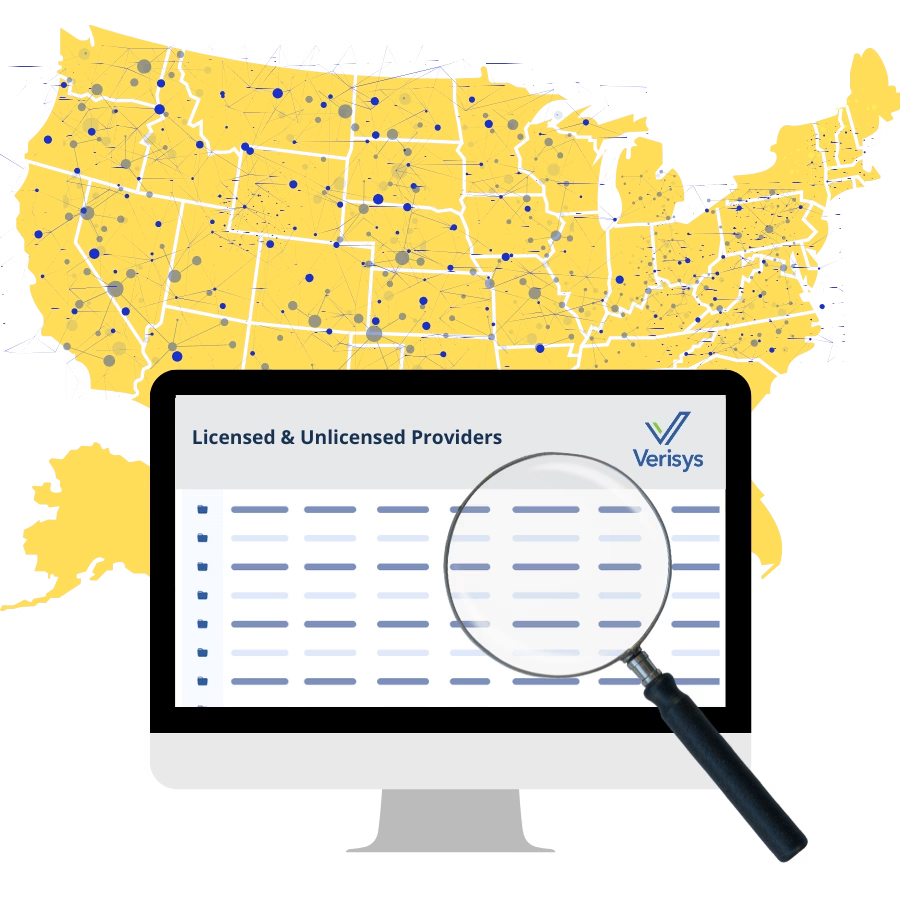
- Real-time verification – Digital credentialing platforms can provide fast, accurate results. This, in turn, lightens administrative burdens. However, these platforms can also mitigate risks by providing a more robust background search process to identify even well-obscured red flags.
- Constant monitoring – After initial verification, credentialing and oversight tools can continue to monitor providers, vendors, and organizations for malicious activity or fraudulent behavior. Ongoing prevention is just as important as initial screening.
Put simply, digital credentialing platforms serve as both fraud prevention technologies and ongoing risk management tools.
Collaboration Across Agencies and Organizations
With the widespread implementation of EHRs, interoperability has become the norm. In turn, cybersecurity threats have become more complex. Bad actors can target multiple departments or facilities in nuanced attacks.
When healthcare organizations, individual departments, and oversight agencies communicate, they can more effectively monitor for and thwart complex attacks like these. Collaboration could look like:
- Sharing data between payers, providers, and regulators
- Creating joint task forces to combat large-scale fraud schemes
- Developing healthcare fraud prevention frameworks across disciplines
Common Barriers to Implementing Fraud Solutions
While the above approaches and tools are powerful, organizations often face challenges as they work to implement them
- High cost – Advanced fraud detection tools can be costly. However, in an age when data security has become a regulatory matter, the cost of preventing healthcare non-compliance consequences is a worthwhile investment.
- Integration with legacy systems – When staff, stakeholders, and patients have been using the same platforms for years, friction at rollout is unavoidable. To ease growing pains, consider widespread staff and patient education, as well as resources that can encourage adoption and empower users with proficiency.
- Resistance to change – Staff and leadership alike can be resistant to change. Organizations can ease this resistance with transparency. Clearly communicate both the benefits of implementation and the potential hiccups users should expect during rollout.
- Regulatory complexity – As healthcare regulations grow more complex, so do risk management and fraud prevention. To best navigate these ever-shifting landscapes, organizations should consider partnering with compliance specialists for up-to-date guidance.
Best Practices for Reducing Fraud Risk
Adopting some or all of the technologies described above can help organizations thwart fraud attempts and protect data. But, in addition to investing in fraud detection and compliance software, organizations must also embrace a few basic best practices:
- Train staff regularly – Both initial training and ongoing education should focus on fraud awareness and describe reporting procedures. Well-trained staff are more likely to utilize powerful tools.
- Conduct regular audits – Regularly review billing, claims, and access logs to stay ahead of potential threats.
- Create a culture of integrity and accountability – Encourage staff and stakeholders to hold each other accountable for fraud prevention efforts. Everyone has a critical role to play in data protection.
Staying Ahead of Fraud in the Digital Era
Expanding virtual clinical platforms, sophisticated attacks, robust monitoring demands—these modern cybersecurity challenges require cutting-edge solutions. By adopting proactive and tech-forward security approaches, today’s direct care organizations and compliance support partners can protect patient data, maintain compliance, and support the bottom line.
It’s time to act: Fraud risks are only escalating, and healthcare organizations must adopt tools to stop evolving risks. Verisys can help. With real-time data solutions and advanced cybersecurity tools, we help healthcare organizations embrace the future while mitigating risk.
Reach out to an expert to learn more about our solutions.
Sources:
US Federal Bureau of Investigation. Health Care Fraud. https://www.fbi.gov/investigate/white-collar-crime/health-care-fraud
US Department of Health and Human Services. Fraud & Abuse Laws. https://oig.hhs.gov/compliance/physician-education/fraud-abuse-laws/
American Medical Association. Meaningful Use: Electronic Health Records (EHR) Incentive Programs. https://www.ama-assn.org/practice-management/medicare-medicaid/meaningful-use-electronic-health-record-ehr-incentive
American Hospital Association. Ransomware Attacks on Hospitals Have Changed. https://www.aha.org/center/cybersecurity-and-risk-advisory-services/ransomware-attacks-hospitals-have-changed