In the healthcare industry, compliance with regulatory standards is not merely a requirement but a cornerstone of safe, effective, and ethical patient care.
When healthcare organizations fail to meet compliance standards, the consequences can be severe—spanning legal and financial realms. The ripple effects of non-compliance can extend to loss of trust from patients, operational disruptions, and reputational damage.
To prevent risks associated with non-compliance, healthcare institutions must adopt a comprehensive monitoring system.
What is Non-Compliance in Healthcare?
Healthcare compliance refers to the process by which healthcare organizations, providers, and practitioners ensure that their operations, procedures, and policies align with established healthcare laws, regulations, and guidelines.
All parties must adhere to both federal and state laws, including those set by governing bodies, and follow ethical standards that safeguard the well-being of patients.
The primary governing bodies that set healthcare compliance standards include:
- The U.S. Department of Health and Human Services (HHS) – Enforces regulations like the Health Insurance Portability and Accountability Act (HIPAA) to ensure patient data privacy and security.
- The Centers for Medicare and Medicaid Services (CMS) – Regulates reimbursement policies and ensures healthcare organizations adhere to the standards necessary to participate in federal healthcare programs.
- The Office of Inspector General (OIG) – Monitors and enforces compliance with regulations that prevent fraud, waste, and abuse in healthcare programs.
- State agencies – Oversee the application of both state and federal rules governing healthcare practice, insurance, and licensure.
Legal Consequences of Non-Compliance
Non-compliance can lead to a series of legal repercussions, which take a toll on a healthcare provider’s operational capacity and legal standing.
Fines and Penalties
Regulatory bodies set strict standards to protect patient privacy, safety, and the integrity of healthcare programs. Healthcare providers who don’t meet these standards can face hefty financial penalties.
A violation of laws such as HIPAA or the False Claims Act can result in fines ranging from thousands to millions of dollars, depending on the scope and severity of the infraction.
For example, Gum Care Dental, located in Maryland, received a penalty of $70,000 for refusing to provide medical records to a patient. In another case, California’s Providence Medical Institute was fined $240,000 for violating HIPAA Security Rules, which led to a data breach.
Lawsuits and Legal Liabilities
Legal exposure arises from patients, employees, or third-party contractors seeking damages for violations that compromise their interests. The financial and reputational toll from lawsuits can be steep, making it even harder for an organization to bounce back.
Imagine a healthcare system caught up in fraudulent billing, submitting false claims to Medicare. The resulting lawsuit would lead to a $20 million settlement, plus extra penalties for violating the False Claims Act. On top of that, the legal costs, settlement fees, and damage to the provider’s reputation would have a lasting impact, threatening their long-term viability.
Loss of Licenses or Certifications
Depending on their specialties and staff, healthcare organizations must maintain specific licenses and certifications to operate legally. Failure to comply with regulations can result in the loss of these essential credentials.
Loss of accreditation from organizations like The Joint Commission or failure to meet CMS requirements can force healthcare providers to cease operations or lose access to essential funding sources, such as Medicare and Medicaid reimbursements.
For instance, a nursing facility’s repeated failure to meet safety standards may result in the revocation of its license, leading to an inability to continue providing care. To resume operations, authoritative bodies may require corrective measures, such as additional staff training.
Financial Consequences of Non-Compliance
While the legal consequences of non-compliance are severe, the financial ramifications can also devastate a healthcare organization’s bottom line. From lost revenue to higher operational costs, non-compliance carries significant monetary risks.
Revenue Loss and Audit Costs
One of the most immediate impacts of non-compliance is revenue loss. Healthcare providers that fail to meet regulatory standards risk being denied reimbursements from insurers or government programs.
For example, improper coding of medical services can result in denied claims, which delays or eliminates revenue that healthcare organizations rely on. Beyond denied claims, organizations may face additional audit costs, such as technology expenses or staffing fees.
Impact on Insurance and Contracts
Non-compliance also affects an organization’s ability to negotiate favorable contracts and maintain affordable insurance coverage:
- Insurance – Insurance providers may raise premiums or even deny coverage for healthcare organizations with a history of non-compliance. Facilities that fail to meet regulatory standards for patient care may also face higher liability insurance costs due to their increased risk profile.
- Contracts – Non-compliant practices can harm relationships with other business partners including suppliers and contractors, potentially resulting in higher costs for medical supplies. Additionally, if a hospital is deemed non-compliant with federal standards, it could struggle to renew contracts with healthcare payers, directly reducing available revenue.
Operational and Reputational Consequences
In addition to the legal and financial consequences, non-compliance disrupts the operational integrity of healthcare organizations and damages their reputation, which can have long-lasting effects.
Disruption of Healthcare Services
Organizations found violating compliance regulations may face operational halts, delays in claims processing, or removal from government-funded healthcare programs like Medicare or Medicaid—which, ultimately, can disrupt patient care.
In other cases, facilities may be required to implement corrective action plans, which could involve additional training and daily tasks.
Damage to Reputation and Patient Trust
The reputational damage resulting from non-compliance is often the most difficult to recover from. Patients trust healthcare organizations to provide safe, effective, and ethical care. If a healthcare provider fails to meet regulatory standards, it risks losing patient confidence, which is crucial to maintaining a strong patient base.
For example, patients may hold back critical health information in fear that it will be shared or leaked, which can negatively affect health outcomes.
How to Avoid Non-Compliance in Healthcare
While non-compliance poses significant risks, healthcare organizations can take proactive steps to ensure they adhere to relevant regulations and standards.
Regular Compliance Audits
The most effective way to prevent non-compliance is by conducting regular audits. These audits assess current practices and help identify gaps in compliance before they result in penalties.
Audits can:
- Identify discrepancies in billing practices
- Uncover gaps in patient records
- Monitor data security
- Evaluate the completeness and accuracy of patient care documentation
Staff Training and Education
A well-trained staff understands the importance of adhering to regulations and is more likely to recognize potential compliance risks. Ongoing education programs, especially regarding patient privacy, billing practices, and safety requirements, guarantee that all employees are equipped to uphold the organization’s standards.
Implementing Automated Compliance Solutions
Automated healthcare workforce compliance solutions that track regulatory changes, flag potential violations, and provide real-time monitoring can significantly reduce the risk of non-compliance.
These systems not only help streamline processes but also enhance accountability across the organization.
Protecting Healthcare Organizations from Non-Compliance Risks
The consequences of non-compliance in healthcare are far-reaching, impacting everything from legal standing and financial health to operational integrity and patient trust.
By conducting regular audits, investing in staff training, and adopting automated provider compliance solutions, healthcare organizations can reduce the risk of violations and maintain a solid foundation of trust and care for their patients.
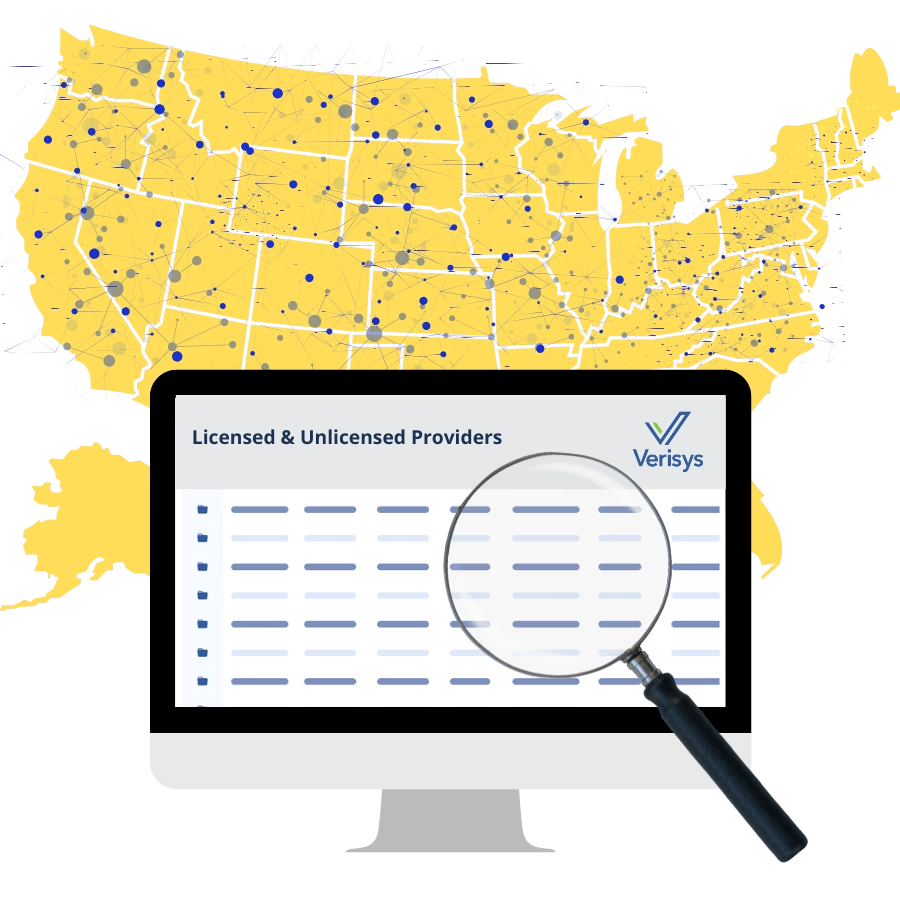
Verisys provides healthcare organizations with the tools and resources they need to stay compliant and avoid costly regulatory violations. By leveraging our healthcare sanctions and actions monitoring services, healthcare organizations can focus on delivering exceptional care, knowing that their compliance needs are being addressed with the utmost attention to detail.
Sources:
ADA. What are the penalties for violating HIPAA? https://www.ada.org/resources/practice/legal-and-regulatory/hipaa/penalties-for-violating-hipaa
The HIPAA Journal. HIPAA Violation Cases. https://www.hipaajournal.com/hipaa-violation-cases/
National Center for Complementary and Integrative Health. Credentialing, Licensing, and Education. https://www.nccih.nih.gov/health/credentialing-licensing-and-education
The Joint Commission. Federal Deemed Status Fact Sheet. https://www.jointcommission.org/resources/news-and-multimedia/fact-sheets/facts-about-federal-deemed-status/
The HIPAA Journal. The Consequences of Non-Compliance in Healthcare. https://www.hipaajournal.com/consequences-of-non-compliance-in-healthcare/